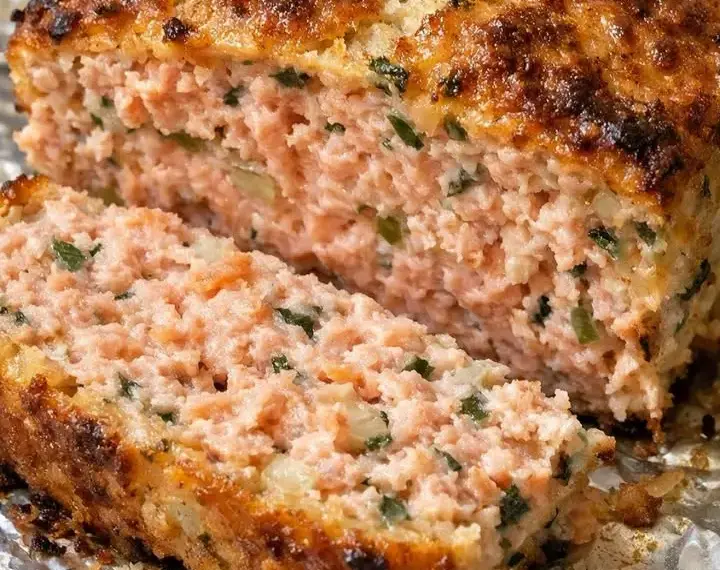
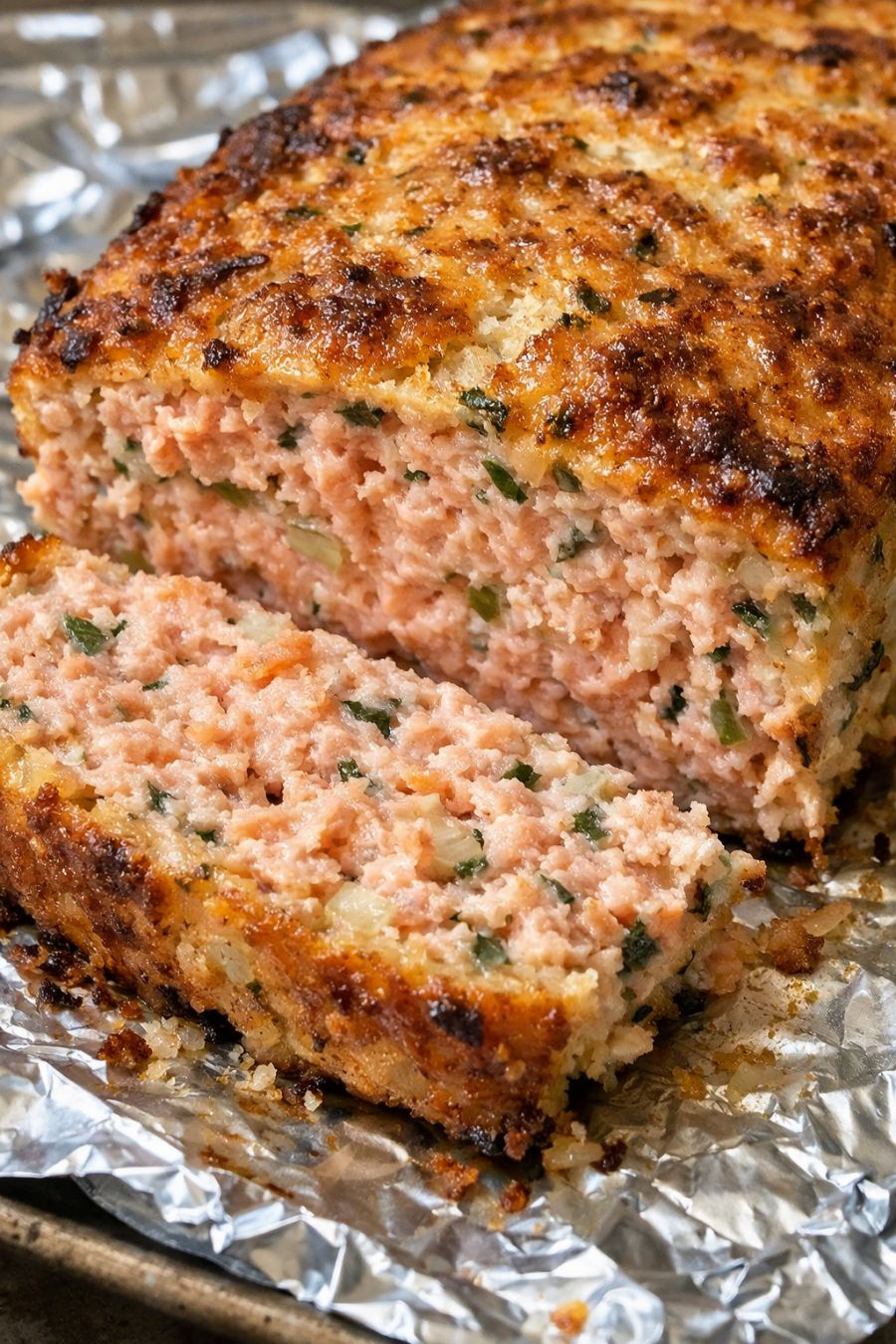
This oven baked 6-ingredient retro salmon loaf is exactly the kind of recipe you’d expect to find handwritten on a stained index card in a great-grandmother’s cookbook. It’s budget-friendly, pantry-based, and leans heavily on canned salmon, eggs, and crackers—the staples that fed a lot of Midwestern families in the 1950s and 60s. The texture is tender and moist inside with a golden, lightly crusty top, flecked with herbs from a simple dried seasoning blend. My husband tells me it tastes like the salmon loaf his mom made on Fridays when he was a kid, and now it’s one of those comfort dishes he asks for on repeat. If you’re craving something nostalgic that comes together with minimal fuss, this is it.
Serve the salmon loaf warm, sliced thickly straight from the baking sheet. It’s classic with mashed potatoes and buttered peas or green beans, but roasted carrots or a simple green salad with a lemony vinaigrette work just as well. A squeeze of fresh lemon over each slice brightens the richness, and a spoonful of tartar sauce or plain yogurt mixed with a bit of mustard makes an easy sauce. Leftovers are wonderful cold, tucked into a sandwich with lettuce and pickles, or gently reheated and served alongside steamed rice and a quick cucumber salad.
Oven Baked 6-Ingredient Retro Salmon Loaf
Servings: 4
Ingredients
2 cans (14–15 oz each) pink salmon, drained and flaked (bones and skin removed if desired)
1 cup finely crushed saltine crackers (about 24 crackers)
2 large eggs, lightly beaten
1/2 cup whole milk (or 2% milk)
1/4 cup finely minced onion
1 tablespoon dried parsley flakes (plus extra for sprinkling on top, optional)
1/2 teaspoon kosher salt (optional, to taste)
1/4 teaspoon black pepper (optional, to taste)
Nonstick cooking spray or a little oil, for the foil
Directions
Heat your oven to 350°F (175°C). Line a baking sheet with aluminum foil and lightly coat the foil with nonstick cooking spray or a thin film of oil. This keeps the loaf from sticking and makes cleanup easy.
In a large mixing bowl, combine the crushed saltine crackers, beaten eggs, milk, minced onion, dried parsley, salt, and pepper (if using). Stir until the crackers are evenly moistened and you have a thick, spoonable mixture.
Add the drained, flaked salmon to the bowl. Gently fold it into the cracker mixture with a spatula or your hands until everything is evenly combined but not overmixed. The mixture should hold together when pressed; if it feels too wet, sprinkle in a bit more crushed cracker, a tablespoon at a time.
Transfer the salmon mixture to the prepared foil-lined baking sheet. Shape it into a compact loaf about 8 inches long and 3–4 inches wide, patting the top and sides smooth. If you like, sprinkle a pinch of extra dried parsley over the top for more color and those classic green flecks.
Bake on the center rack for 35–40 minutes, or until the loaf is firm to the touch, lightly golden on top, and the edges look set. If you’d like a slightly more crusty top, you can bake for an additional 5 minutes, watching to be sure it doesn’t dry out.
Remove the baking sheet from the oven and let the salmon loaf rest on the foil for about 5–10 minutes. This brief rest helps it slice cleanly. Using a thin spatula, carefully loosen the loaf from the foil and transfer to a serving platter, or slice directly on the foil-lined sheet. Cut into thick slices and serve warm.
Variations & Tips
For a slightly richer loaf, you can replace a few tablespoons of the milk with mayonnaise or sour cream, which was common in mid-century recipes. If you grew up with a stronger onion flavor, increase the minced onion to 1/3 cup or use a tablespoon of dried minced onion instead for a more pronounced, old-fashioned taste. A teaspoon of dried dill or celery seed can be added alongside the parsley for an herbier profile without straying too far from the retro feel. To make this a bit lighter, use low-sodium crackers and 2% milk, and skip the added salt, especially if your salmon and crackers are already seasoned. For a dairy-free version, swap the milk for unsweetened oat milk or another neutral plant milk and ensure your crackers are dairy-free. If you prefer to use fresh salmon, cook it fully first, flake it, and measure by weight (about 24–28 ounces cooked), keeping in mind that fresh salmon will have a slightly different texture and may need a few extra crushed crackers if the mixture is too moist. Leftovers should be cooled quickly, covered, and refrigerated within 2 hours; use within 3 days. Reheat slices gently in a 300°F (150°C) oven until warmed through, or enjoy cold. Because this recipe uses canned salmon and eggs, avoid leaving the baked loaf out at room temperature for extended periods, and always discard any portions that have sat out for more than 2 hours to maintain food safety.