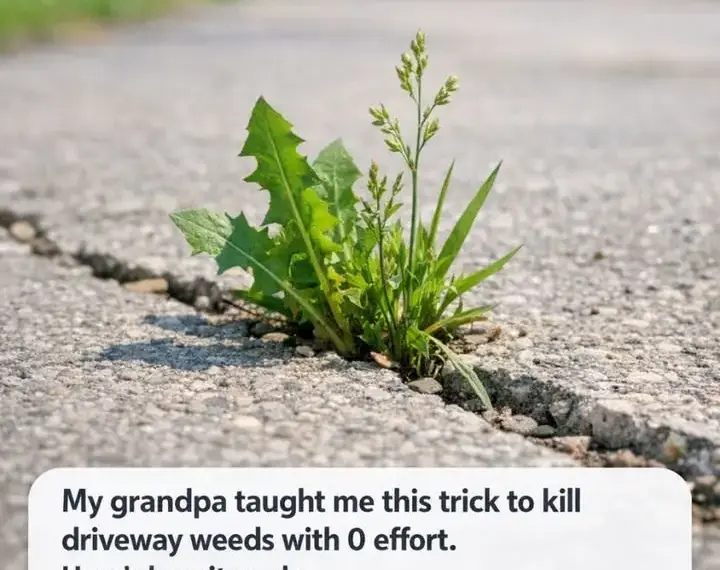
Weeds are the perennial adversary of anyone who takes pride in maintaining a pristine driveway. They have a knack for sprouting in the most inconvenient places, mocking our efforts to keep our outdoor spaces neat and tidy. Over the years, I’ve tried countless commercial products, each promising to eradicate these pesky invaders, but often with limited success or at a high environmental cost.
It wasn’t until a visit with my grandpa that I discovered a remarkably simple, yet effective trick to combat driveway weeds. With a lifetime of gardening experience under his belt, he had perfected a method that was not only effective but also required virtually no effort. This trick, which utilizes common household ingredients, has transformed the way I approach weed control, saving me time and money while keeping my driveway weed-free.
1. The Surprisingly Simple Trick My Grandpa Swore By
My grandpa’s trick involves a combination of white vinegar and salt, two everyday items that, when used together, create a potent weed-killing solution. The process is straightforward: mix one gallon of white vinegar with one cup of table salt and a tablespoon of dish soap. The dish soap acts as a surfactant, helping the solution adhere to the waxy surfaces of the leaves.
This concoction is then transferred into a spray bottle or garden sprayer. The beauty of this method lies in its simplicity and accessibility; most people already have these ingredients at home, making it an easy solution to implement whenever weeds start to appear.
2. Why Driveway Weeds Are So Hard To Kill For Good
Driveway weeds are particularly stubborn due to their ability to thrive in harsh conditions. They often grow in cracks and crevices where soil, light, and moisture are limited. These weeds have adapted to survive with minimal resources, making them more resilient than their lawn-bound counterparts.
Additionally, traditional weed killers can struggle with these opportunistic plants because the chemicals may not penetrate deep enough to reach the roots. This can result in the weed dying back temporarily, only to regrow a short time later. The key to effective control is targeting the root system, which is where my grandpa’s method excels.
3. The Science Behind This Effortless Weed-Killing Method
The effectiveness of the vinegar and salt solution lies in the science behind its components. Vinegar contains acetic acid, which draws moisture out of the plant, effectively dehydrating it. This acid is strong enough to kill most small weeds on contact, especially when combined with salt, which disrupts the internal water balance of the plant.
Salt, or sodium chloride, is a desiccant. It absorbs water and prevents the plant from absorbing it from the soil. Together, vinegar and salt create an inhospitable environment for weeds, while the dish soap ensures the solution sticks to the leaves long enough to take effect.
4. What You Need To Get Started (It’s Probably Already In Your Kitchen)
To start using this method, you will need the following ingredients: one gallon of white vinegar, one cup of table salt, and one tablespoon of dish soap. Additionally, you will require a spray bottle or a garden sprayer for application.
Most households have these items readily available, making this method not only convenient but also cost-effective. There’s no need for expensive chemical treatments when a simple trip to your kitchen can provide all the necessary components.
5. Step-By-Step: How To Apply The Trick With Almost No Work
Begin by mixing the white vinegar, salt, and dish soap in a large container. Stir the mixture until the salt is fully dissolved. Carefully pour the solution into a spray bottle or garden sprayer.
When applying the solution, choose a dry day to ensure that rain does not wash it away before it can take effect. Spray the solution directly onto the weeds, focusing on the leaves and any exposed roots. There’s no need to saturate the surrounding soil, as this can affect nearby plants.
This method requires minimal effort beyond the initial mixing and application. Simply spray and let the solution do the work.
6. How Long It Takes To See Results On Stubborn Cracks And Crevices
Results can often be seen within a few hours of application, as the solution begins to dehydrate the leaves. Weaker weeds might brown and wither almost immediately, while more robust growths may take a day or two.
For weeds in particularly deep or sheltered cracks, a second application may be necessary. However, most users find that a single treatment is sufficient to kill even the most stubborn weeds.
7. Safety Tips For Pets, Kids, And Nearby Plants
Although this method is generally safe, it’s important to exercise caution, especially if you have pets or small children. Avoid spraying on windy days to prevent the solution from drifting onto desirable plants or areas where pets and kids play.
Keep pets and children away from treated areas until the solution has dried. This typically takes just a few hours, after which the area should be safe for normal use.
8. Common Mistakes That Make The Trick Less Effective
One common mistake is applying the solution on a rainy day or just before watering the driveway. This can dilute the mixture, reducing its effectiveness. It’s best to apply on a dry, sunny day.
Another mistake is using a diluted mixture. Ensure the salt fully dissolves and that you follow the recipe closely for the best results. Over-application can also harm nearby plants or soil quality, so apply judiciously.
9. How Often You Need To Repeat It For A Weed-Free Driveway
For best results, apply the solution every few weeks, especially during the growing season. This will help prevent new weeds from taking root and keep existing ones from regrowing.
Regular monitoring and treatment can maintain a weed-free driveway with minimal effort, as the solution provides both immediate results and longer-term prevention.
10. When This Hack Won’t Work—And What To Try Instead
This method might not work effectively on larger, deeply-rooted perennial weeds, which may require more aggressive treatment. In such cases, manual removal or spot treatment with a stronger herbicide might be necessary.
If the vinegar and salt solution fails to deliver the desired results, consider using a commercial weedkiller designed for tougher, more established weeds. Always follow the manufacturer’s instructions for safe and effective use.
11. The Hidden Perks: Cheaper, Greener, And Easier Than Store-Bought Sprays
One of the greatest advantages of this method is its cost-effectiveness. A gallon of vinegar and a box of salt cost a fraction of what most commercial weedkillers do, and they last longer.
This solution is also environmentally friendly, avoiding the use of harsh chemicals that can linger in the soil and water supply. It’s a greener option that aligns with sustainable gardening practices, making it a smart choice for eco-conscious homeowners.