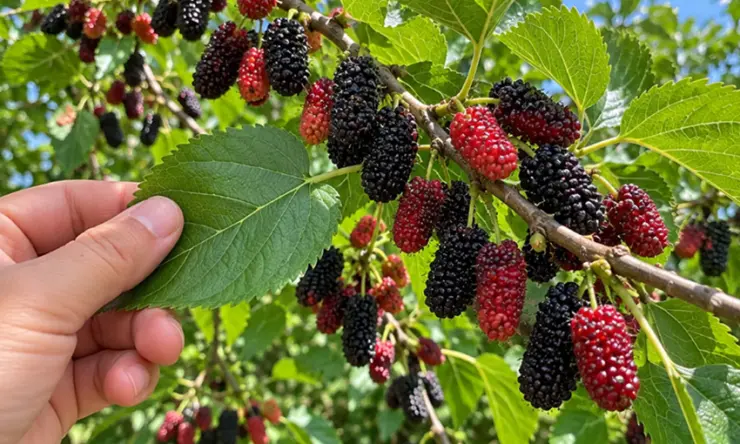
Mulberries are soft, juicy fruits produced by trees of the Morus genus. Depending on the variety, they can be white, pink, red, or almost black when ripe.
They have been enjoyed for generations, yet in many places ripe mulberries simply fall to the ground unnoticed. That’s a shame because these little fruits offer fiber, vitamin C, minerals, and colorful plant compounds.
1.Rich in Vitamin C
Fresh mulberries provide a useful amount of vitamin C, an essential nutrient that contributes to normal immune function, collagen production, and protection of cells from oxidative stress.
2.Packed With Antioxidant Compounds
Dark-colored mulberries contain anthocyanins, the pigments responsible for their deep red, purple, or black appearance.
They also contain other polyphenols, including flavonoids. These compounds are studied for their antioxidant activity and potential role in supporting long-term health.
3.A Good Source of Fiber
Eating whole mulberries provides dietary fiber, which supports normal digestion and helps make fruit more filling.
This is one reason eating the whole berry is generally preferable to drinking strained mulberry juice.
4.They Provide Iron and Other Minerals
Mulberries contain several minerals, including iron, potassium, and calcium, although quantities vary with species, ripeness, and growing conditions.
They shouldn’t be considered a replacement for iron-rich foods or supplements when treating a deficiency, but they can contribute to a varied diet.
5.How to Eat Mulberries
Fully ripe mulberries are delicious straight from the tree after washing. Their sweet, slightly tart flavor also makes them extremely versatile.
Try them:
- Fresh as a snack
- Mixed into yogurt or oatmeal
- Added to smoothies
- In fruit salads
- Made into jam or preserves
- Baked into pies, muffins, or cakes
- Frozen for later
- Dried like raisins
Can You Freeze Mulberries?
Absolutely. Because fresh mulberries are delicate and spoil relatively quickly, freezing is one of the easiest ways to preserve a large harvest.
Wash them gently, allow them to dry thoroughly, freeze them in a single layer, and then transfer the frozen berries to a suitable container or freezer bag.
Interestingly, the fruit isn’t the only useful part of the tree.
Mulberry leaves—particularly those of white mulberry (Morus alba)—have a long history of culinary and traditional use. They’re also famous as the primary food source for silkworms.
The leaves contain biologically active compounds and shouldn’t automatically be treated like ordinary salad greens; established culinary preparations and appropriate identification matter.
Harvest Them Carefully
Only collect berries from a correctly identified mulberry tree growing in a clean location.
Avoid fruit from heavily polluted roadsides or trees that may have been treated with unsuitable pesticides. Wash harvested berries gently before eating them.
Mulberries deserve far more attention than they receive.
They’re sweet, naturally colorful, rich in vitamin C and antioxidant plant compounds, and incredibly versatile in the kitchen.
Eat them fresh during their short season, freeze them for later, dry them, or transform a large harvest into homemade preserves.
If you have a mulberry tree nearby, don’t let all those ripe berries fall unnoticed—you may have one of summer’s most underrated fruits growing right above you.