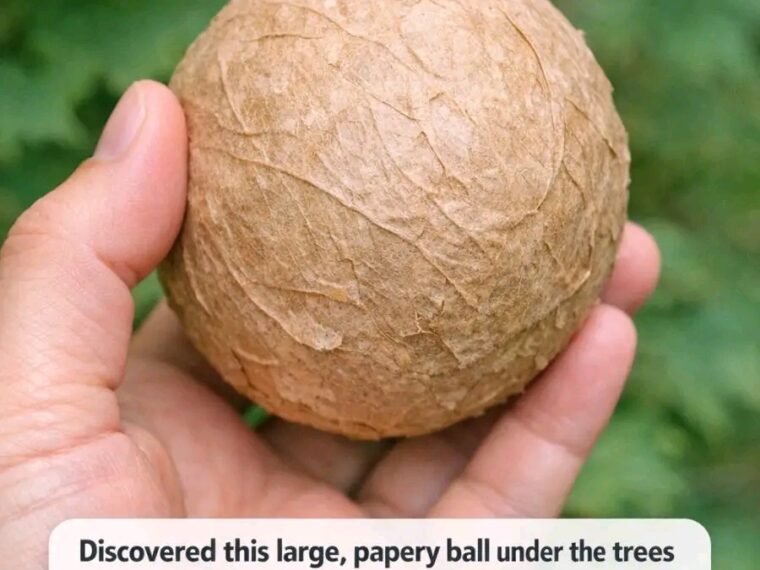
When you’re wandering through your yard and suddenly spot a large, papery ball under your trees, it’s natural to wonder what it is. These curious objects can appear almost overnight, and their lightweight, hollow nature might have you thinking you’ve stumbled upon a mysterious creature’s egg.But before you start imagining fantastical creatures or rare bird species nesting in your yard, it’s worth taking a closer look. These papery balls aren’t eggs at all, but rather a fascinating natural phenomenon known as oak apple galls. These marvels of nature have a unique story and are the product of a tiny insect’s lifecycle, offering a glimpse into the intricate interactions between plants and insects.
1. What That Papery Ball Really Is (Hint: Not an Egg)The papery ball you’ve found is most likely an oak apple gall, a type of growth that occurs on oak trees. Despite its name, it is not an apple nor an egg. Galls are abnormal outgrowths of plant tissues caused by various parasites, from fungi and bacteria to insects and mites. In the case of oak apple galls, they are primarily induced by the larvae of tiny wasps from the Cynipidae family. These galls can vary in size, typically ranging from 2 to 4 inches in diameter, and are lightweight due to their hollow interior.Oak apple galls are named for their superficial resemblance to apples. However, they are much lighter and have a distinct papery texture. The gall forms as the tree’s response to the wasp’s egg-laying process, creating a protective structure for the developing larvae inside. While they may seem out of place in your yard, these structures are a natural part of the lifecycle of certain oak trees and their insect inhabitants.
2. How Oak Apple Galls Form on Your TreesOak apple galls begin to form when a female gall wasp lays her eggs on the leaf buds or twigs of an oak tree. The presence of the eggs triggers a reaction in the tree that causes it to produce a growth around the eggs. This growth, or gall, forms over several weeks and serves as both a protective enclosure and a source of nutrition for the developing wasp larvae.As the larvae grow, they feed on the gall tissue, which continues to develop around them. The gall provides a safe environment, shielding the larvae from predators and environmental factors. Once the larvae mature, they exit the gall, leaving behind the hollow, papery shell that often falls to the ground, which is what you may have found under your trees.
3. The Tiny Wasp Behind the Giant “Egg” IllusionThe insect responsible for the formation of oak apple galls is typically a species of gall wasp, belonging to the Cynipidae family. These wasps are incredibly small, often no larger than 1/8 of an inch. Despite their size, they have a significant impact on the trees they inhabit.The female wasp uses her ovipositor to inject her eggs into the developing tissue of an oak tree. The chemical interactions between the wasp’s eggs and the tree induce the formation of the gall. This process is a remarkable example of complex ecological relationships, where the behavior of a tiny insect can lead to the creation of such a distinct and noticeable structure.