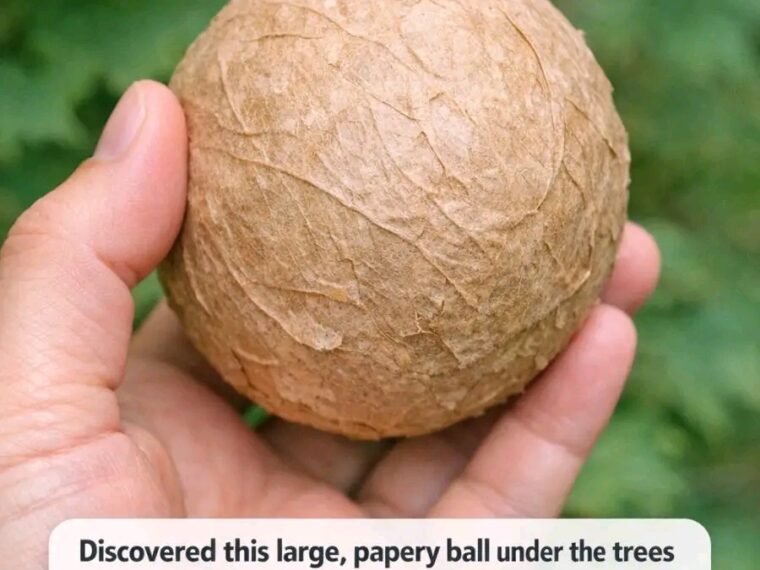
4. Why Oak Apple Galls Are Hollow and Light as a FeatherThe hollow nature of oak apple galls is primarily due to the lifecycle of the wasps that inhabit them. As the gall develops, it forms a protective outer shell while leaving the interior largely empty beyond the space needed for the wasp larvae. This structure is efficient, providing security without the need for a solid mass inside.Once the larvae mature and leave the gall, what remains is a lightweight, papery shell. This empty husk is what often surprises people who discover them, as the galls may seem solid from the outside, yet are surprisingly fragile and light when handled.
5. How to Tell an Oak Apple Gall From a Real Egg or NestIdentifying an oak apple gall can be straightforward if you know what to look for. Unlike eggs or nests, oak apple galls are attached directly to the oak tree itself, often on the branches or leaves. They have a distinctly spherical shape and are typically tan to brown in color.The texture of a gall is also a giveaway. While eggs tend to be smooth and solid, galls are papery and can be easily crushed. Nests, on the other hand, are often composed of twigs, leaves, and other materials woven together, lacking the uniform spherical structure of a gall.
6. Common Types of Oak Galls You Might See in Your YardOak apple galls are just one type of gall you might encounter. Other common galls include horned oak galls and wool sower galls. Horned oak galls are smaller and harder, with distinctive horn-like protrusions, often found on twigs and branches. Wool sower galls resemble fluffy cotton balls and are caused by a different species of wasp.Each type of gall is specific to certain species of oaks and insects. The diversity of galls adds to the rich tapestry of interactions between plants and insects, highlighting the complexity of ecosystems even within a single tree.