Why Do Visual Perceptions Vary So Much?
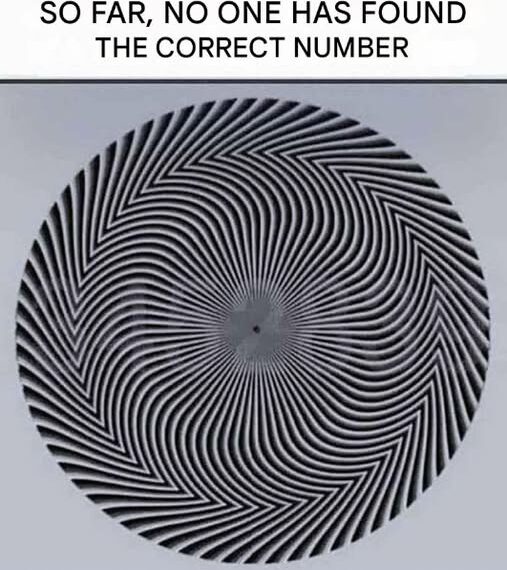
At first glance, the challenge seems simple: spot the hidden number in the image. Yet, when people are shown this optical illusion, the responses differ dramatically. Some confidently state they see “528,” while others insist the figure is “45283.” The real answer, however, surprises nearly everyone—the complete hidden sequence is 3,452,839.
This dramatic variation in perception highlights the fascinating way our eyes and brain work together. Specifically, it’s all about contrast sensitivity—our ability to distinguish objects based on differences in brightness or shading. This skill is essential for everyday safety and performance, from reading traffic signs in low light to recognizing facial expressions at a distance.
The Science Behind the Illusion
The image cleverly plays with light and shadow. Numbers located toward the center have higher contrast, making them stand out more clearly. Numbers toward the edges fade into lower contrast, making them nearly invisible to some viewers.
This isn’t a flaw in your eyesight—it’s a reflection of how individual contrast sensitivity varies. Your ability to perceive the complete number depends on:
- Eye health — conditions like astigmatism, myopia, or cataracts can subtly reduce contrast detection.
- Lighting conditions — bright, even lighting enhances perception, while glare or dimness reduces clarity.
- Age — as we grow older, the eye’s lens and retina undergo natural changes that can affect visual processing.
A Simple Test of Your Visual Acuity
If you spotted 3,452,839 immediately, congratulations—you have excellent contrast sensitivity.
If you only saw part of the sequence, don’t worry—it doesn’t necessarily mean poor eyesight. Instead, it means your eyes respond differently to certain brightness levels.
Optometrists sometimes use contrast sensitivity tests alongside standard eye exams. These can detect early signs of vision issues before they show up in traditional charts. In some cases, reduced contrast sensitivity can be linked to early stages of glaucoma, macular degeneration, or other retinal concerns—conditions that benefit from early diagnosis and treatment.
Can You Improve Contrast Sensitivity?
While genetics and age play a role, there are steps you can take to optimize your visual performance:
- Schedule regular eye exams — Professional screenings can catch issues early, especially if you work in visually demanding environments or spend long hours at a computer.
- Upgrade your eyewear — Modern prescription lenses with anti-reflective coatings or blue-light filtering can enhance clarity and reduce visual fatigue.
- Protect against UV damage — Quality sunglasses protect your retina and lens, reducing the risk of contrast loss over time.
- Eat for eye health — Nutrients like lutein, zeaxanthin, and omega-3 fatty acids, found in leafy greens and fish, are linked to better retinal function.
- Optimize your lighting — Whether reading, working, or driving, good lighting is essential for accurate visual processing.
Why It Matters Beyond the Illusion
This optical trick isn’t just fun—it’s a reminder that vision is a complex interplay between eye structure, brain processing, and environmental factors. In real life, contrast sensitivity can affect:
- Night driving safety — spotting pedestrians, road markings, and hazards in dim light.
- Sports performance — tracking fast-moving objects in variable lighting.
- Workplace efficiency — reducing mistakes in visually detailed tasks.
By understanding and caring for this often-overlooked aspect of vision, you can protect not just your ability to see—but your safety, independence, and quality of life.