A perfect croissant is a balance of buttery, crispy layers and a delicious filling. Whether you’re making chocolate croissants at home or baking them professionally, choosing the right amount of filling can make a big difference in the final result.
Too little filling can leave your croissant tasting mostly like plain pastry, while too much can overwhelm its delicate texture and cause problems during baking.
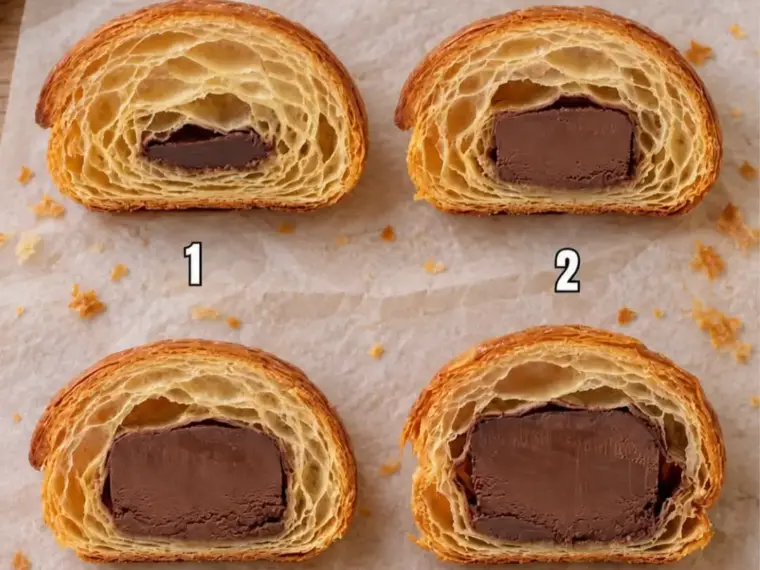
The image illustrates four different amounts of chocolate filling. Let’s explore each option and discover what makes a well-filled croissant.
1. Option 1: Too Little Filling
The first croissant contains a small amount of chocolate in the center.
Advantages:
- Preserves the light, airy texture of the croissant.
- Allows the buttery flavor of the pastry to shine.
- Reduces the risk of chocolate leaking during baking.
Disadvantages:
- The chocolate flavor may be too subtle.
- Some bites may contain very little or no chocolate.
- The filling may feel insufficient for those who prefer a rich chocolate croissant.
Verdict: This option is suitable for people who prefer a lightly filled pastry, but it may not provide enough chocolate for a satisfying chocolate croissant.
2. Option 2: A Balanced Amount of Filling
The second croissant contains a more generous piece of chocolate while leaving plenty of room for the pastry’s delicate layers.
This approach offers a good balance between the buttery croissant and its chocolate center.
Advantages:
- Provides a noticeable chocolate flavor.
- Maintains the contrast between crispy pastry and soft filling.
- Leaves enough space for the dough to expand during baking.
- Helps prevent excessive filling from escaping.
Disadvantages:
- The chocolate may still be insufficient for people who prefer an especially rich filling.
- The result depends on the size of the croissant and the type of chocolate used.
Verdict: This is a good starting point for a classic chocolate croissant, particularly if you want the pastry and chocolate to complement each other.
3. Option 3: A Generous Chocolate Filling
The third croissant contains a substantially larger amount of chocolate.
For chocolate lovers, this can be an appealing choice because the filling becomes a major part of the eating experience.
Advantages:
- Delivers a stronger chocolate flavor.
- Creates a richer, more indulgent pastry.
- Provides a satisfying contrast between the crisp exterior and the chocolate center.
Disadvantages:
- Excessive filling may make the pastry feel heavy.
- Chocolate can leak through weak seams during baking.
- The filling may interfere with rolling or sealing the dough if it is too large.
Verdict: This is a good option for a rich, chocolate-forward croissant, provided the filling is proportioned appropriately to the dough.
4. Option 4: An Extra-Large Filling
The fourth croissant contains the largest piece of chocolate among the four examples.
This approach prioritizes the filling, making the croissant particularly appealing to people who want chocolate in almost every bite.
Advantages:
- Maximizes the chocolate-to-pastry ratio.
- Creates a rich and indulgent eating experience.
- Makes the chocolate center a prominent feature of the croissant.
Disadvantages:
- The filling may overwhelm the delicate flavor of the pastry.
- Excessive filling can make shaping and sealing more difficult.
- Chocolate may escape during baking, potentially leaving gaps in the center.
- The additional weight may affect the structure of a small croissant.
Verdict: This option may work well for a deliberately oversized, chocolate-heavy pastry, but it requires careful shaping and an appropriate amount of filling for the dough.
How Much Chocolate Should You Put in a Croissant?
There is no single correct amount. The ideal quantity depends on the size of the croissant, the type of chocolate, and the result you want.
For a standard homemade chocolate croissant, you can start with approximately 20–30 grams of chocolate per croissant and adjust according to your preferences.
For smaller pastries, use less. For larger pastries, you may be able to use more without compromising the structure.
These quantities are practical starting points rather than exact measurements established by the image.
Factors to consider
1. The size of the dough
A larger croissant can accommodate more filling. The amount of chocolate should be proportional to the dough so that the pastry retains its structure.
2. The type of chocolate
Chocolate batons designed for baking are convenient because they hold their shape reasonably well. Dark chocolate offers a more intense flavor, while milk chocolate creates a sweeter result.
Chocolate spreads and ganache behave differently because they soften and flow more readily during baking.
3. The placement of the filling
Position the chocolate in the center of the dough and leave enough space around the edges to seal the pastry properly.
4. The quality of the pastry
A well-laminated croissant has delicate layers of dough and butter that expand during baking. Overloading the dough can make shaping more difficult and may compromise the finished pastry.
Tips for Making the Perfect Chocolate Croissant
Follow these practical tips to achieve a delicious result.
- Use good-quality chocolate. Choose chocolate with a flavor that complements the buttery pastry.
- Keep the filling proportional. Start with a moderate amount and increase it gradually if you prefer a richer center.
- Seal the dough carefully. Position the filling so that the edges can be closed without stretching or tearing the dough.
- Avoid overfilling. Too much chocolate can leak out during baking and leave the center uneven.
- Handle the dough gently. Avoid crushing the delicate layers when shaping your croissants.
- Bake until golden brown. A properly baked croissant should have a crisp exterior and a light, airy interior.
- Allow the pastry to cool slightly. Chocolate inside a freshly baked croissant can be extremely hot, so let it rest briefly before eating.
Common Mistakes to Avoid
Even a good croissant recipe can produce disappointing results if the filling is not handled correctly.
Adding too much chocolate
A large filling may look attractive before baking, but it can escape through the seams as the pastry expands. Increase the quantity gradually rather than filling the dough to its limit.
Using the wrong type of filling
A thick chocolate baton behaves differently from a liquid chocolate spread. Choose a filling suitable for baking and consider how it will behave at high temperatures.
Failing to seal the pastry
If the edges are not properly secured, melted chocolate may leak out. Leave enough room to close the dough around the filling.
Neglecting the pastry itself
Chocolate is only one part of a good chocolate croissant. The dough should still be buttery, crisp, and light. A large quantity of filling cannot compensate for poorly developed pastry layers.
Final Verdict: Which Croissant Is Best?
The best choice depends on your personal preference.
- Option 1: Best for people who prefer a subtle chocolate flavor.
- Option 2: Best for a balanced chocolate-to-pastry ratio.
- Option 3: Best for those who want a richer chocolate center.
- Option 4: Best for people who prioritize a generous chocolate filling.
For a classic chocolate croissant, Option 2 is a sensible starting point, while Option 3 is worth trying if you prefer a more indulgent pastry.
Ultimately, the ideal croissant combines a crisp, golden exterior, a light and airy interior, and enough chocolate to make every bite enjoyable.