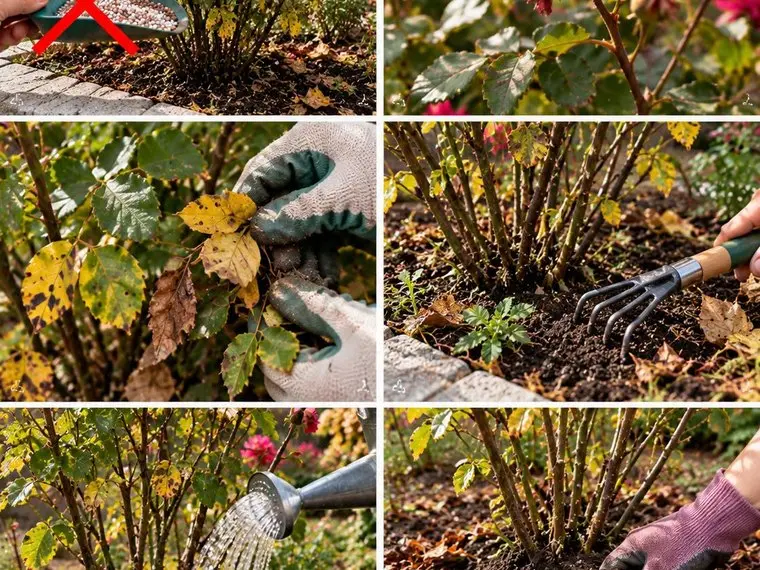
As autumn temperatures begin to drop and the garden slowly prepares for winter, your roses need a little extra attention.
After months of producing beautiful flowers, rose bushes naturally begin slowing their growth as daylight decreases and colder weather approaches.
But what you do during October and November can make an important difference in how well your roses survive winter and recover in spring.
The good news is that preparing roses for winter doesn’t require complicated techniques or expensive gardening products.
In fact, some of the most effective autumn care involves knowing what not to do.
Heavy pruning, late nitrogen fertilizing, excessive watering, and applying winter protection too early can cause more problems than they solve.
Whether you grow hybrid tea roses, floribundas, shrub roses, climbing roses, or roses in containers, these 12 practical tasks will help you prepare them for the colder months.
Important: This guide is intended primarily for temperate climates with cold winters. The exact timing depends on your local frost dates, rose varieties, and winter temperatures. Gardeners in mild climates may need much less protection.
1. Stop Fertilizing Your Roses Before Winter
One of the most important autumn tasks is to stop encouraging new, tender growth.
During spring and summer, roses benefit from nutrients that support healthy foliage, strong stems, and abundant flowering.
However, applying nitrogen-rich fertilizer too late in the season can encourage soft new shoots that may not mature before freezing weather.
These tender shoots are especially vulnerable to frost damage.
What to Do
- Stop routine nitrogen-rich fertilizing approximately 6–8 weeks before your expected first frost, or follow the earlier cutoff recommended for your region.
- Avoid applying quick-release lawn fertilizer around rose bushes.
- Don’t add large quantities of fresh manure in autumn.
- Allow the plants to slow their growth naturally.
- Resume feeding in spring when active growth begins.
Should You Use Potassium Fertilizer in Autumn?
Some gardeners recommend high-potassium fertilizers to prepare roses for winter.
However, additional potassium isn’t automatically beneficial if your soil already contains enough.
A soil test is the best way to identify nutrient deficiencies.
Don’t assume that a special autumn fertilizer will make every rose more winter-hardy.
Best tip: In most established rose gardens, stopping late-season feeding is more useful than adding another fertilizer application.
2. Stop Routine Deadheading as Winter Approaches
During the flowering season, removing faded flowers can encourage many repeat-flowering roses to produce additional blooms.
This process is called deadheading.
However, as autumn progresses, gardeners in cold climates often stop routine deadheading to avoid encouraging another flush of tender growth.
Some rose varieties also develop colorful seed-bearing fruits known as rose hips.
These can provide winter interest and food for birds.
What to Do
- Stop routine deadheading toward the end of the growing season.
- Allow suitable rose varieties to develop hips naturally.
- Remove flowers that are clearly diseased or rotting.
- Avoid cutting back healthy stems simply to remove every faded bloom.
Important Detail
Allowing rose hips to develop is not a guaranteed way to force dormancy.
Seasonal changes in temperature and daylight are the main signals that influence the plant’s growth cycle.
Also, some modern roses produce few hips.
Best tip: If you grow roses known for attractive hips, leave them in place for a beautiful winter display.
3. Remove Diseased Leaves and Fallen Debris
Autumn cleanup is one of the most valuable tasks for maintaining healthy rose bushes.
Roses are susceptible to several fungal diseases, including black spot, rust, and powdery mildew.
Some disease-causing organisms can survive on infected plant debris or affected stems.
Leaving heavily diseased leaves around the base of the plants may contribute to disease pressure during the following growing season.
What to Do
- Inspect the leaves for black spots, rust-colored pustules, and other signs of disease.
- Remove heavily infected leaves where practical.
- Collect fallen rose leaves from beneath the bushes.
- Remove dead flower petals and decaying plant material.
- Dispose of diseased debris appropriately.
- Clean your pruning tools after working with infected plants.
Should You Remove Every Green Leaf?
Not necessarily.
Healthy leaves continue photosynthesizing while conditions allow.
Avoid stripping all healthy foliage from actively growing roses in early autumn.
As leaves naturally fall or become badly diseased, remove the problematic material.
What About Composting?
Avoid placing heavily infected rose debris into a typical cool home compost pile.
Many home compost systems don’t reach temperatures high enough to reliably destroy all plant pathogens.
Best tip: Focus on removing diseased debris from the rose bed rather than aggressively stripping healthy plants.
4. Avoid Heavy Pruning in October and November
This is one of the most common mistakes gardeners make.
After the flowering season ends, it can be tempting to cut rose bushes down dramatically to make the garden look tidy.
However, severe autumn pruning can expose plants to unnecessary winter damage.
In many cold and temperate climates, the main pruning period for bush roses is late winter or early spring, when the risk of severe freezing is decreasing.
What to Do Instead
- Remove obviously dead, broken, or badly diseased stems when necessary.
- Leave healthy structural stems intact.
- Avoid major reshaping in early autumn.
- If long canes are being damaged by strong winds, shorten or secure them as needed.
- Save the main pruning for the appropriate season for your rose type.
Can You Shorten Tall Roses Before Winter?
Yes, in exposed gardens.
Long canes can sway in strong winds, loosening the root system or damaging stems.
This problem is sometimes called wind rock.
Where necessary, tall bush roses can be shortened moderately to reduce wind damage.
However, this is a practical adjustment rather than a requirement to prune every rose.
In some mild climates, gardeners routinely reduce tall bush roses by approximately one-third in late autumn.
In colder regions, it’s often preferable to leave more healthy wood in place and make final pruning decisions in spring.
Best tip: Don’t cut every rose bush to 20–30 cm in autumn. Pruning requirements differ considerably between rose types.
5. Check Soil Moisture Before the Ground Freezes
Roses need adequate moisture going into winter, especially if autumn has been unusually dry.
Although their growth slows as temperatures drop, the roots remain living tissue.
Plants entering winter with extremely dry root zones may be more vulnerable to dehydration and stress.
However, overwatering is equally undesirable.
What to Do
- Check the soil several inches below the surface.
- If autumn has been dry and the soil is genuinely dry, water deeply.
- Direct water toward the root zone rather than spraying the foliage.
- Allow excess water to drain away.
- Reduce watering as growth slows and temperatures fall.
- Stop watering when the ground is frozen.
How Much Water Is Needed?
There is no universal quantity.
Watering needs depend on soil type, rainfall, plant size, and temperature.
Established roses in moist garden soil may not need any additional autumn watering.
Newly planted roses and those growing in sandy soil may require closer attention.
Best tip: Check the soil before watering. A fixed weekly schedule is rarely appropriate during late autumn.
6. Remove Weeds and Improve Drainage Around Your Roses
Autumn is an excellent time to inspect the soil around your rose bushes.
Weeds can compete with roses for moisture and nutrients.
Dense vegetation can also reduce airflow around the lower stems.
At the same time, poorly drained soil can create problems during prolonged winter rainfall.
What to Do
- Remove weeds growing directly around the base of each rose.
- Pull them carefully to avoid damaging shallow roots.
- Clear debris that traps moisture against stems.
- Check whether water collects around the planting area after heavy rain.
- Improve drainage where necessary.
What if the Soil Is Heavy Clay?
Avoid digging or working heavy clay when it is saturated.
Doing so can damage soil structure and increase compaction.
If waterlogging is a recurring problem, consider raised planting beds or broader drainage improvements.
Best tip: Roses generally prefer soil that retains some moisture but drains well. Constantly saturated soil can damage roots.
7. Apply Mulch at the Right Time
Mulching is one of the most effective ways to protect rose roots and improve soil conditions.
However, ordinary garden mulch and heavy winter insulation serve slightly different purposes.
A layer of composted bark, leaf mold, or well-rotted compost can help moderate soil temperatures, reduce moisture fluctuations, and suppress weeds.
In colder climates, more substantial winter protection may be necessary for less-hardy roses.
What to Do
- Remove weeds and diseased debris.
- Wait until the weather has cooled.
- Spread approximately 2–3 inches (5–8 cm) of suitable organic mulch over the surrounding soil.
- Avoid packing ordinary mulch tightly against the stems.
- Leave some space around the crown where winter protection isn’t required.
- Adjust protection according to your climate and rose type.
Why Timing Matters
Applying a thick insulating mound too early can keep the base of the plant unnecessarily warm and moist.
In climates with severe winters, specialized protective mounding is generally best done after the plant has entered dormancy and the soil has begun to cool or freeze.
Best tip: Don’t confuse routine mulching with burying the entire base of a rose bush under damp organic material.
8. Protect the Rose Crown and Graft Union in Cold Climates
Some roses are more vulnerable to severe winter temperatures than others.
Hybrid tea roses, certain floribundas, and grafted varieties may require additional protection in colder regions.
Many hardy shrub roses, landscape roses, and species roses need little or no special insulation when grown within their recommended hardiness zones.
What Is the Graft Union?
On grafted roses, the graft union is the swollen area where the flowering variety joins the rootstock.
Depending on the climate and planting recommendations, this area may be positioned at or below soil level.
In very cold regions, protecting it can be important.
How to Protect Vulnerable Roses
- Wait until the rose has become dormant and cold weather is established.
- Remove diseased debris from the base.
- Use loose, well-draining soil to mound around the lower canes and graft union.
- In climates requiring substantial protection, a mound approximately 6–12 inches (15–30 cm) high may be appropriate.
- Take soil from another part of the garden rather than digging it away from the rose’s own roots.
- Add suitable insulating material if recommended for your region.
- Remove the protection gradually in spring when severe freezing is no longer expected.
Important Warning
Avoid creating a constantly wet, compacted mound around the crown.
Poorly drained winter protection can cause problems.
Also, don’t assume that every rose needs this treatment.
Best tip: Match the level of winter protection to the plant’s hardiness and the severity of your local winter.
9. Secure Climbing Roses Against Strong Winter Winds
Climbing roses need slightly different autumn care from ordinary bush roses.
Their long canes can be damaged by strong winds, heavy snow, or ice.
Loose stems may rub against supports, break, or become detached.
October and November are good months to inspect the supports before winter storms arrive.
What to Do
- Examine the trellis, arch, fence, or pergola.
- Repair loose or damaged supports.
- Secure long, flexible canes with soft plant ties.
- Leave enough room for natural stem movement and growth.
- Remove obviously dead or broken canes.
- Avoid unnecessary severe pruning.
Should You Prune Climbing Roses in November?
It depends on the type and climate.
Many repeat-flowering climbing roses are routinely pruned during winter, often between December and February in mild temperate regions.
Long, whippy shoots can be secured or shortened earlier to prevent wind damage.
Rambling roses that flower once on older wood often have different pruning requirements, with many best pruned after flowering in summer.
Best tip: Before pruning a climbing rose, determine whether it is a repeat-flowering climber or a once-flowering rambler.
10. Protect Roses Growing in Pots and Containers
Container-grown roses are often more vulnerable to winter damage than roses planted in the ground.
The main problem isn’t always the exposed branches.
It’s the roots.
In garden soil, roots benefit from insulation provided by the surrounding ground.
In pots, the root ball is exposed to colder air from several directions.
During severe freezes, the potting mix may become much colder than the soil around established garden roses.
What to Do
- Check that the container has adequate drainage holes.
- Move the pot to a sheltered location away from strong winter winds.
- Place it against a protected wall if suitable.
- Insulate the container using appropriate breathable materials.
- Avoid leaving pots standing in water.
- Check moisture periodically during frost-free periods.
Best Protection in Very Cold Regions
Where winters are severe, a dormant potted rose may be protected by sinking its container into the ground before the soil freezes.
Another option is storing it in a cool, frost-protected location.
A suitable unheated garage or shed may work if temperatures remain appropriate for dormant roses.
Avoid placing dormant roses in a warm living room, where insufficient light and high temperatures may encourage weak growth.
Should You Water Potted Roses During Winter?
Yes, occasionally, if the potting mix becomes too dry and conditions allow watering.
Don’t keep the soil constantly wet.
Never allow containers to sit in standing water.
Best tip: In cold climates, protecting the roots of a potted rose is often more important than wrapping its branches.
11. Inspect Roses for Pests and Diseases Before Winter
Autumn is a useful time to assess the overall health of your roses.
Common problems include black spot, rust, powdery mildew, and various insect pests.
However, not every mark on a leaf requires treatment.
As temperatures drop, some foliage naturally yellows and declines.
What to Do
- Examine stems and remaining foliage.
- Look for signs of serious disease.
- Remove heavily infected debris.
- Check for damaged or broken stems.
- Inspect the crown for unusual swelling, wounds, or decay.
- Avoid unnecessary pesticide applications.
Should You Spray Roses Before Winter?
Not automatically.
Routine spraying without identifying a specific problem may be unnecessary and can affect beneficial organisms.
If a disease or pest requires treatment, choose a product specifically labeled for roses and the identified problem.
Follow local regulations and the product label.
Dormant sprays are not universally required, and their usefulness depends on the pest or disease involved.
Best tip: Good sanitation, suitable spacing, resistant varieties, and correct watering are important foundations of long-term rose health.
12. Make a Spring Pruning and Feeding Plan
One of the smartest things you can do in November is prepare for the next growing season.
Instead of rushing to prune everything before winter, identify which roses will need attention when growth resumes.
Different rose groups require different pruning techniques.
Hybrid Tea Roses
These usually benefit from annual pruning in late winter or early spring.
Remove dead and weak growth and shorten healthy stems according to the plant’s vigor and local conditions.
Floribunda Roses
These also benefit from spring pruning to encourage strong, balanced growth and abundant flower clusters.
Shrub Roses
Many shrub roses need lighter pruning.
Focus on removing dead wood, improving shape, and maintaining healthy structure.
Climbing Roses
Pruning depends on the variety and flowering habit.
Many repeat-flowering climbers are pruned during dormancy, while once-flowering ramblers are often pruned after flowering.
Groundcover Roses
These generally need less intensive pruning than hybrid tea roses.
Remove damaged growth and manage size when necessary.
What About Spring Fertilizer?
When active growth resumes, evaluate soil fertility and plant vigor.
Apply an appropriate rose fertilizer if needed, following the product instructions.
A spring mulch of well-rotted organic matter can also improve soil conditions.
Best tip: Label your rose varieties now. Knowing what type you have makes correct spring pruning much easier.
October vs. November: What Should You Do and When?
Although the same tasks may overlap, it helps to divide autumn rose care into two stages.
| Task | October | November |
|---|---|---|
| Stop nitrogen-rich fertilizer | Yes, if not already stopped | Keep feeding stopped |
| Reduce routine deadheading | Yes | Usually finished |
| Remove diseased foliage | As needed | Continue cleanup |
| Major pruning | Usually avoid | Usually avoid for bush roses |
| Check soil moisture | Yes | Before freezing |
| Remove weeds | Yes | As needed |
| Routine mulching | Depending on conditions | Often suitable |
| Heavy winter protection | Usually too early | After dormancy and appropriate cold |
| Secure climbing roses | Yes | Recheck ties |
| Protect potted roses | Prepare materials | Protect before severe freezes |
| Inspect for disease | Yes | Final cleanup |
| Plan spring pruning | Useful | Useful |
Remember: Weather matters more than the calendar. A mild November may require less protection than a very cold October in another region.
7 Common Mistakes That Can Damage Roses During Winter
1. Cutting Roses Back Too Severely in Autumn
Heavy pruning can expose tender tissue and remove wood that would otherwise provide protection.
2. Fertilizing Too Late
Late nitrogen feeding may encourage vulnerable new shoots.
3. Applying Heavy Winter Protection Too Early
Early insulation can keep the crown unnecessarily warm and damp.
4. Ignoring Diseased Fallen Leaves
Infected debris can contribute to recurring disease problems.
5. Overwatering During Cold Weather
Waterlogged soil can damage roots.
6. Leaving Potted Roses Completely Exposed
Container roots can freeze more severely than roots growing in the ground.
7. Treating Every Rose Variety the Same
A hardy shrub rose and a tender hybrid tea rose may require very different winter care.
Do All Roses Need Winter Protection?
No.
The amount of protection required depends on the rose variety and the local climate.
Hardy Shrub Roses
Many hardy shrub roses can survive cold winters with minimal intervention.
They may need little more than autumn cleanup and appropriate mulching.
Hybrid Tea Roses
Some hybrid teas are less winter-hardy and may benefit from crown protection in cold regions.
Floribunda Roses
Hardiness varies by cultivar.
Some are quite resilient, while others require protection during severe winters.
Climbing Roses
The main concern is often protecting long canes from wind and extreme cold.
Miniature Roses
Hardiness varies. Miniature roses grown in small pots may be particularly vulnerable because of their exposed roots.
Newly Planted Roses
Young plants that haven’t established extensive root systems may need more attention than mature, well-rooted roses.
The most effective strategy is to choose rose varieties suited to your climate and provide additional protection only when necessary.
Frequently Asked Questions
Should I prune roses in October?
Avoid heavy pruning of most bush roses in October. Remove dead, damaged, or diseased growth when necessary and secure long stems exposed to wind.
Should I cut roses down in November?
Not automatically. Many bush roses are best pruned in late winter or early spring. In exposed locations, moderate shortening may help reduce wind damage.
When should I stop fertilizing roses?
Stop nitrogen-rich feeding well before the first expected frost, commonly around 6–8 weeks beforehand or according to local recommendations.
Should I remove all rose leaves before winter?
Remove fallen and diseased leaves. Healthy leaves don’t always need to be stripped from actively growing plants.
Should I water roses before winter?
If autumn has been unusually dry, watering before the ground freezes can be helpful. Avoid overwatering or watering saturated soil.
What is the best mulch for roses?
Well-rotted compost, composted bark, and other suitable organic materials can work well. Heavy winter protection may require different materials depending on climate.
When should I mound soil around roses?
In cold climates where mounding is necessary, wait until plants are dormant and appropriately cold weather has arrived.
Can I use fallen leaves to protect roses?
Dry, clean leaves can sometimes be used as insulation when contained appropriately, but avoid packing wet, diseased leaves tightly around the crown.
Do climbing roses need pruning in November?
Some climbing roses can be pruned during the dormant season, but timing varies. Secure loose canes in autumn and identify the variety before making major cuts.
Can potted roses stay outside all winter?
Some can, depending on climate, pot size, and cultivar hardiness. In cold regions, their roots often need additional protection.
Should I spray roses before winter?
Only when a specific pest or disease problem justifies treatment. Routine preventive spraying isn’t necessary for every garden.
Do roses need sunlight during winter?
Dormant deciduous roses don’t have the same light requirements as actively growing plants. However, roses should return to a suitable sunny growing position when growth resumes.
Can roses survive snow?
Yes. Many hardy roses tolerate snow and freezing temperatures well. Their survival depends on cultivar hardiness, root protection, and local conditions.
When should winter protection be removed?
Remove it gradually in spring once the danger of severe freezing has passed, before trapped warmth and moisture cause problems.
Final Thoughts
Preparing roses for winter doesn’t mean cutting everything back, covering every plant, or adding more fertilizer.
In fact, the most successful autumn rose care is often surprisingly simple.
Stop late-season feeding, clean up diseased foliage, check soil moisture, protect vulnerable roots, and avoid unnecessary pruning.
October is an excellent time to inspect your rose bushes, remove problematic debris, and prepare for colder weather.
November is often the time to finish cleanup, secure climbing stems, protect container-grown roses, and apply winter insulation where local conditions require it.
The key is to work with the natural seasonal cycle of your roses rather than forcing them into dormancy.
Healthy, well-established roses are remarkably resilient, and many varieties need only minimal winter protection.
By choosing the right tasks at the right time, you can help reduce winter damage and give your roses a stronger start when spring returns.
A little thoughtful care in October and November can help your roses come back healthier, stronger, and ready for another beautiful flowering season.