Snake plants are among the easiest houseplants to grow, but there’s something even better than having one healthy snake plant: turning it into several new plants without spending money.
Known botanically as Dracaena trifasciata (formerly Sansevieria trifasciata), the snake plant is loved for its upright, sword-shaped leaves, striking green patterns, and ability to tolerate a wide range of indoor conditions.
Whether you have a large snake plant that needs dividing or just one healthy leaf, you can use it to grow new plants.
The best part? There are three simple ways to propagate snake plants: in water, in soil, or by dividing the roots.
Each method has its advantages. Some are perfect for beginners, while others produce established plants much faster.
If you’ve ever wondered how to multiply your snake plant collection, here’s everything you need to know.
When Is the Best Time to Propagate Snake Plants?
Snake plants can be propagated indoors at different times of the year, but spring and summer are generally the best seasons.
During warmer months, plants are actively growing, and cuttings tend to develop roots more quickly.
The ideal conditions include:
- Bright, indirect sunlight
- Warm temperatures between 68–85°F (20–29°C)
- Well-draining potting mix
- Moderate indoor humidity
- Protection from cold drafts
Propagation is still possible during autumn or winter, but root development may take longer.
Before beginning, choose a healthy plant with firm leaves and no signs of rot or serious pest damage.
Method 1: Propagate Snake Plants in Water
Water propagation is one of the most popular ways to grow new snake plants.
It’s particularly appealing because you can watch the roots develop through a transparent glass container.
This method is simple, inexpensive, and suitable for beginners.
However, patience is important. Snake plant cuttings may take several weeks or even months to develop roots and new shoots.
What You’ll Need
- One healthy snake plant leaf
- Clean, sharp scissors or a sterilized knife
- A clear glass or small jar
- Clean water
- A bright location away from harsh direct sunlight
Step-by-Step Instructions
Step 1: Choose a Healthy Leaf
Select a mature, firm leaf from a healthy snake plant.
Avoid leaves that are yellowing, soft, damaged, or showing signs of rot.
A strong leaf gives your cutting a better chance of success.
Step 2: Cut the Leaf
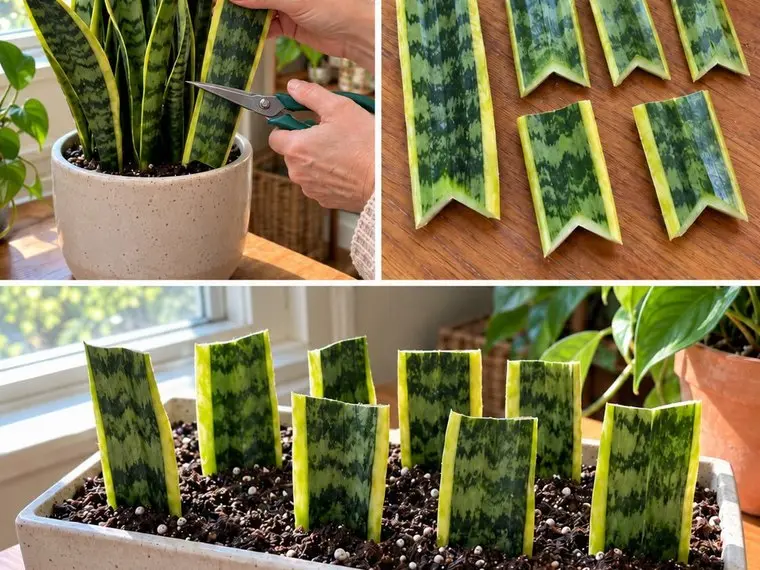
Using clean scissors or a sharp knife, cut the leaf near its base.
You can use the entire leaf or divide it into sections approximately 3–5 inches (8–13 cm) long.
Important: Keep track of which end of each section originally pointed toward the roots.
Snake plant cuttings have a natural orientation. If you place them upside down, they generally won’t root successfully.
A useful trick is to make a straight cut at the top and a small V-shaped cut at the bottom of each section.
This makes the correct orientation easier to remember.
Step 3: Let the Cut End Dry
Place the cutting in a clean, dry, shaded location for approximately 24–48 hours.
Allow the cut surface to dry and begin forming a protective callus.
This can help reduce the risk of decay after the cutting is placed in water.
Step 4: Place the Cutting in Water
Fill a small glass with enough clean water to cover approximately 1 inch (2.5 cm) of the bottom of the cutting.
Don’t submerge the entire leaf.
Only the lower portion needs to be underwater.
Step 5: Find the Right Location
Place the glass in a warm spot with bright, indirect light.
Avoid intense midday sunlight, which can overheat the water and stress the cutting.
Step 6: Change the Water Regularly
Replace the water every 5–7 days, or sooner if it becomes cloudy.
Rinse the container if necessary.
Clean water helps reduce bacterial growth and unpleasant odors.
Step 7: Wait for Roots to Develop
Roots may begin appearing after approximately 3–8 weeks, although some cuttings take considerably longer.
Don’t worry if nothing happens during the first few weeks.
Snake plants are naturally slow growers.
Step 8: Transfer to Soil
Once the cutting has developed a reasonable root system, preferably with several roots approximately 1–2 inches (2.5–5 cm) long, transfer it to a small pot.
Use a well-draining succulent or cactus potting mix.
Water lightly and allow the soil to dry partially between waterings.
How Long Does Water Propagation Take?
Root development can take several weeks to a few months.
Producing a new baby plant may take additional months.
Water propagation is rewarding, but it isn’t usually the fastest method.
Important Note About Variegated Snake Plants
If your snake plant has yellow leaf margins, such as the popular ‘Laurentii’ variety, leaf cuttings usually won’t preserve the yellow variegation.
The new shoots typically emerge green.
To maintain the original leaf pattern, use root division instead.
Method 2: Propagate Snake Plants Directly in Soil
Soil propagation is another excellent method, particularly if you prefer not to transfer rooted cuttings from water into a pot later.
Instead of developing roots in a glass, the leaf cutting grows directly in a suitable potting mix.
This method reduces the need for transplanting and allows roots to develop in the same environment where the plant will continue growing.
What You’ll Need
- A healthy snake plant leaf
- A clean, sharp knife or scissors
- Small pots with drainage holes
- Succulent or cactus potting mix
- Optional perlite or pumice
- Water
Step-by-Step Instructions
Step 1: Select and Cut a Leaf
Choose a healthy, mature leaf.
Cut it near the base using a clean tool.
You can keep the leaf whole or divide it into sections approximately 3–5 inches (8–13 cm) long.
Remember to mark the bottom of each section.
Step 2: Allow the Cuttings to Callus
Leave the cuttings in a dry, shaded location for approximately 1–2 days.
The cut surfaces should feel dry before planting.
Step 3: Prepare the Potting Mix
Fill a small pot with a loose, well-draining growing medium.
A commercial succulent or cactus mix is suitable.
If the mix holds too much moisture, adding perlite or pumice can improve drainage.
Avoid heavy garden soil that remains wet for long periods.
Step 4: Insert the Cutting
Place the bottom end of the cutting approximately 1–1.5 inches (2.5–4 cm) into the soil.
Make sure it stands upright.
Firm the potting mix gently around the base.
Don’t bury the cutting too deeply.
Step 5: Water Carefully
Moisten the soil lightly.
Avoid soaking the potting mix.
Because the cutting doesn’t yet have roots, excessive moisture can increase the risk of rot.
Step 6: Provide Warmth and Indirect Light
Place the pot in a warm location with bright, indirect sunlight.
Temperatures around 70–80°F (21–27°C) are favorable.
Avoid cold windowsills and direct afternoon sunlight.
Step 7: Be Patient
Roots may begin forming within several weeks, but new shoots often take much longer.
Depending on conditions, you may not see visible new growth for two to four months or more.
Resist the temptation to pull the cutting out repeatedly to inspect its roots.
Step 8: Watch for New Growth
Eventually, a small new shoot may emerge from the soil near the original cutting.
This is a sign that propagation has succeeded.
Continue caring for the plant with moderate light and careful watering.
Should You Use Rooting Hormone?
Rooting hormone is optional.
Snake plants can root without it.
If you choose to use a rooting product, follow its instructions and avoid applying excessive amounts.
Why Soil Propagation Sometimes Fails
The most common causes include:
- Overwatering
- Poor drainage
- Cold temperatures
- Upside-down cuttings
- Damaged or unhealthy leaves
- Excessive direct sunlight
The most important rule is to keep the soil lightly moist when needed, never constantly wet.
Method 3: Propagate Snake Plants by Division
Division is generally the fastest and most reliable method of propagating snake plants.
Unlike leaf propagation, division produces new plants that already have roots and established growing points.
It’s also the best method for preserving variegated varieties.
If your snake plant has several clusters of leaves or small baby plants growing around the main plant, division may be the ideal choice.
What You’ll Need
- A mature snake plant with multiple shoots
- Clean, sharp knife or pruning shears
- Several small pots with drainage holes
- Fresh succulent potting mix
- Gardening gloves
- Optional newspaper or a potting mat
Step-by-Step Instructions
Step 1: Remove the Plant From Its Pot
Carefully tip the pot sideways and slide the plant out.
If the roots are tightly packed, gently squeeze a flexible container or loosen the soil around the edges.
Avoid pulling forcefully on the leaves.
Step 2: Examine the Root System
Snake plants grow from thick underground stems called rhizomes.
These rhizomes connect the main plant to new shoots, often called pups.
Look for natural sections with their own leaves, roots, and growing points.
Step 3: Separate the Offshoots
If the sections come apart easily, separate them gently by hand.
For tightly connected rhizomes, use a clean, sharp knife.
Try to leave each division with a healthy portion of roots.
Avoid making unnecessary cuts.
Step 4: Inspect the Roots
Healthy snake plant roots should be firm.
Remove any roots that are clearly rotten, mushy, or severely damaged.
If you make large cuts through thick rhizomes, allow the cut surfaces to dry briefly before repotting.
Step 5: Prepare New Pots
Choose containers only slightly larger than the root systems.
Fill them with a well-draining succulent mix.
Pots with drainage holes are essential.
Step 6: Replant Each Division
Place each section into its own pot.
Keep the plant at approximately the same soil depth as before.
Don’t bury the crown too deeply.
Firm the soil gently around the roots.
Step 7: Water Carefully
If the roots are mostly intact, water modestly after repotting.
If the divisions have significant fresh wounds, allow the potting mix to remain relatively dry for a few days before watering.
Never leave the pots standing in water.
Step 8: Allow the Plants to Recover
Keep the divisions in bright, indirect light.
Avoid strong direct sunlight while they adjust.
You may notice a temporary slowdown in growth, but established divisions usually recover more quickly than leaf cuttings.
Why Division Is So Effective
Each division already contains living roots and growing points.
That means the plant doesn’t have to develop an entirely new root system from a leaf cutting.
New growth may become visible within several weeks or months, depending on the plant and growing conditions.
Best for Variegated Snake Plants
Division preserves the characteristics of the parent plant much more reliably than leaf cuttings.
If you want to maintain the yellow margins of a ‘Laurentii’ snake plant, choose this method.
Which Snake Plant Propagation Method Is Best?
| Method | Difficulty | Root Development | Main Advantage |
|---|---|---|---|
| Water propagation | Easy | Several weeks to months | You can watch roots grow |
| Soil propagation | Easy | Several weeks to months | No water-to-soil transfer needed |
| Division | Easy to moderate | Roots already present | Fastest establishment and preserves variegation |
Best for beginners: Water propagation.
Best for growing several plants from one leaf: Soil propagation.
Best for quick results: Division.
Best for variegated snake plants: Division.
All three methods can work well when performed correctly.
7 Important Tips for Successful Snake Plant Propagation
1. Always Use Healthy Leaves
Damaged, yellowing, or rotting leaves are less likely to propagate successfully.
Choose firm, mature leaves.
2. Never Plant Leaf Cuttings Upside Down
Snake plant leaf sections have a natural top and bottom.
Keep the original lower end pointing downward.
3. Avoid Overwatering
Too much water is one of the leading causes of snake plant propagation failure.
These plants store moisture in their thick leaves and don’t tolerate constantly saturated soil.
4. Use Small Pots
Oversized containers hold more wet potting mix than small root systems can use.
Choose pots that fit the developing roots.
5. Provide Bright, Indirect Light
Snake plants tolerate low light, but propagation is generally more successful in brighter conditions.
Avoid harsh direct sunlight on unrooted cuttings.
6. Keep Cuttings Warm
Cold temperatures can slow or prevent rooting.
Aim for warm indoor conditions.
7. Be Patient
Snake plants aren’t fast-growing plants.
Some cuttings develop roots quickly, while others take months.
A healthy, firm cutting with no signs of rot may still be progressing even when no new growth is visible.
Why Is My Snake Plant Cutting Not Growing?
If your cutting hasn’t produced roots or new leaves, several factors may be responsible.
The Cutting Is Upside Down
This is especially common when a leaf has been divided into several sections.
Always keep the original bottom end downward.
The Temperature Is Too Low
Snake plant cuttings root more slowly in cold rooms.
Move them to a warmer location.
The Soil Is Too Wet
Constantly wet soil can cause the cutting to rot.
Improve drainage and reduce watering.
The Cutting Needs More Light
Very dark locations can slow growth.
Move the cutting to bright, indirect light.
The Plant Simply Needs More Time
Even under good conditions, new shoots may take months to appear.
Don’t discard a healthy cutting too early.
Can You Propagate a Snake Plant From Just One Leaf?
Yes.
A single healthy snake plant leaf can be divided into multiple sections.
Each correctly oriented section has the potential to develop roots and eventually produce new shoots.
For example, a 20-inch (50 cm) leaf could be divided into four or five sections.
However, not every cutting will succeed, and leaf propagation doesn’t reliably preserve variegation.
If your goal is to produce several new green snake plants, leaf cuttings are an economical option.
Can Snake Plants Live Permanently in Water?
Snake plants can sometimes be maintained in water for extended periods, but this requires more attention than simply leaving a cutting in a jar.
Water-grown plants need appropriate nutrients, clean water, and healthy roots.
For most beginners, transferring rooted cuttings into well-draining potting mix is a more practical long-term approach.
How Long Does It Take to Grow a New Snake Plant?
Propagation time varies depending on the method and growing conditions.
Water and soil cuttings may take several weeks to produce roots and several additional months to develop new shoots.
Divisions already have roots, so they generally establish faster.
Warmth, light, healthy parent material, and careful watering all influence success.
Don’t expect a large, mature snake plant within a few weeks.
Growing new snake plants is a gradual process.
Frequently Asked Questions
What is the easiest way to propagate a snake plant?
Water propagation is easy for beginners because the roots are visible. Division is usually the quickest way to establish a new plant.
Can you propagate snake plants in water?
Yes. Place the correctly oriented bottom of a healthy leaf cutting in a small amount of clean water.
How often should you change the water?
Approximately every 5–7 days, or sooner if the water becomes cloudy.
Can you propagate snake plants directly in soil?
Yes. Allow the cut surface to dry, then plant the bottom end in a well-draining potting mix.
How long does snake plant propagation take?
Roots may develop within several weeks, while new shoots can take several months or longer.
Can you propagate a snake plant without roots?
Yes. Leaf cuttings can develop new roots when provided with suitable conditions.
Do snake plant cuttings need direct sunlight?
No. Bright, indirect light is generally preferable during propagation.
Can you propagate snake plants in winter?
Yes, but rooting may be slower because of reduced light and cooler temperatures.
Why is my snake plant cutting rotting?
Common causes include excessive moisture, poor drainage, low temperatures, or unhealthy cutting material.
Will a yellow-edged snake plant stay variegated after leaf propagation?
Usually not. New plants from leaf cuttings of varieties such as ‘Laurentii’ often emerge green. Division is the better method for preserving the original pattern.
Should I use fertilizer while propagating?
Unrooted cuttings don’t usually need fertilizer. Wait until roots and active growth are established before beginning light feeding.
Can I propagate snake plant pups?
Yes. Pups can be separated once they have a suitable root system, making division one of the most effective propagation methods.
Final Thoughts
Propagating snake plants is one of the easiest ways to expand your indoor plant collection without buying new plants.
Whether you choose water propagation, soil propagation, or root division, each method offers a simple way to turn an existing plant into something new.
Water propagation lets you watch the roots develop, soil propagation allows cuttings to establish directly in their growing medium, and division produces new plants much faster.
If you have a mature snake plant with several offshoots, division is usually the best option.
If you only have one healthy leaf, try cutting it into sections and rooting them in water or soil.
Remember to keep the cuttings warm, provide bright indirect light, avoid excessive watering, and be patient.
With proper care, a single snake plant can eventually become several beautiful houseplants for your home or to share with friends and family.
And once you’ve successfully propagated your first snake plant, you may never need to buy another one.