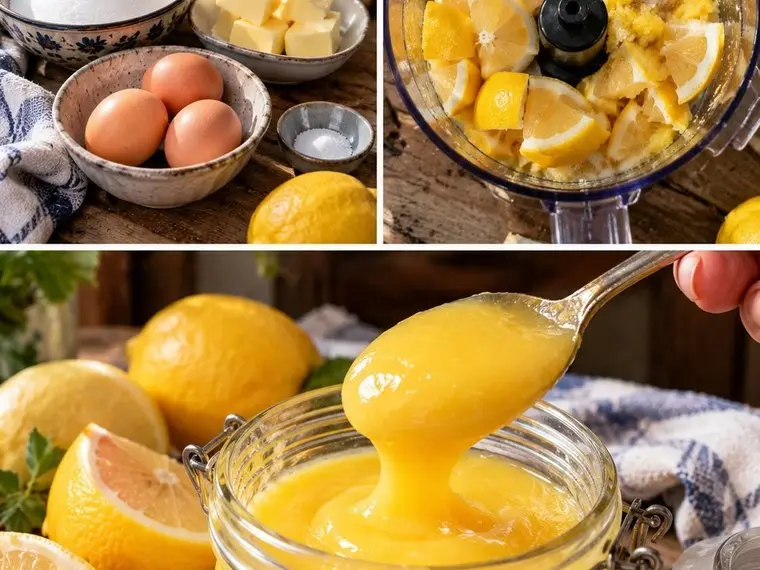
What if you could turn a couple of fresh lemons into a rich, silky, golden spread that tastes like something from a professional bakery?
Homemade lemon curd is one of those recipes that seems complicated until you discover how simple it can be.
Traditionally, lemon curd is made with lemon juice, zest, sugar, eggs, and butter. But there’s another interesting approach: using almost the entire lemon, including its fragrant peel.
This technique works particularly well with Meyer lemons, which are known for their thinner skins, floral aroma, and sweeter, less sharply acidic flavor.
The result is a delicious citrus spread with a deeper lemon flavor than many traditional versions.
And the best part? You don’t need special equipment or complicated techniques.
With a blender, a saucepan, and a few basic ingredients, you can prepare homemade whole lemon curd that’s perfect for toast, pancakes, cakes, pastries, and dozens of other desserts.
This updated recipe also includes a few important improvements to help you avoid bitterness, prevent scrambled eggs, achieve a smooth texture, and store your homemade curd safely.
What Is Whole Lemon Curd?
Whole lemon curd is a variation of traditional lemon curd that incorporates more of the lemon itself instead of relying only on squeezed juice.
The lemon peel contains aromatic oils responsible for much of the fruit’s distinctive fragrance.
Using some of the peel creates a fuller, more complex citrus flavor.
However, not every part of the lemon tastes equally good.
The bright outer layer, called the zest, is highly aromatic.
The white layer beneath it, known as the pith, can contribute bitterness, particularly in ordinary lemons with thick skins.
That’s why Meyer lemons are especially useful for this recipe.
Their peel is often thinner and milder than that of standard supermarket lemons.
The secret to a delicious whole lemon curd is balancing the fragrant peel with the juicy flesh, sugar, eggs, and butter without allowing too much bitterness into the mixture.
Homemade Whole Meyer Lemon Curd Recipe
This version uses Meyer lemons, whole eggs, an additional egg yolk for richness, and a little extra butter for a smooth, luxurious texture.
The ingredients are blended, strained, gently cooked, and finished with butter.
Recipe Details
- Preparation time: 10 minutes
- Cooking time: Approximately 8–12 minutes
- Chilling time: At least 2 hours
- Total time: Approximately 20–25 minutes of active preparation, plus chilling
- Yield: Approximately 1½–2 cups, depending on the lemons and how much pulp is strained out
- Difficulty: Easy to moderate
Ingredients
- 2 medium Meyer lemons, approximately 180–220 g total
- 170 g granulated sugar (about ¾ cup plus 1 tablespoon)
- 2 large eggs
- 1 large egg yolk
- 65 g unsalted butter (about 4½ tablespoons), cut into small cubes
- 1 small pinch of fine salt
- 1–2 tablespoons fresh lemon juice, optional, for a brighter flavor
Optional Flavor Additions
- ½ teaspoon vanilla extract
- A small amount of finely grated fresh ginger
- A little orange zest
- A few drops of orange blossom water
These additions are optional. For the first batch, I recommend making the classic lemon version so you can appreciate its natural citrus flavor.
Equipment
- Food processor or blender
- Sharp knife
- Fine-mesh strainer
- Medium nonreactive saucepan
- Silicone spatula or whisk
- Kitchen thermometer, preferably digital
- Clean glass jar or food-safe storage container
Step-by-Step Instructions
Step 1: Wash the Lemons Thoroughly
Because this recipe uses the peel, washing the lemons is particularly important.
Choose fresh, undamaged Meyer lemons.
Whenever possible, select lemons sold as suitable for culinary use of the peel.
Wash them thoroughly under running water and gently scrub their surfaces with a clean produce brush.
Dry them with a clean kitchen towel.
Avoid using soap or household detergents on fruit.
Tip: If your lemons have a thick wax coating or you’re uncertain whether the peel is suitable for cooking, use lemons specifically sold for zesting or culinary peel use.
Step 2: Remove the Ends and Seeds
Cut off the stem and blossom ends of each lemon.
Slice the lemons into quarters.
Carefully remove all visible seeds.
Seeds can introduce unpleasant bitterness when blended.
Inspect the center of each lemon and remove any particularly thick, fibrous white core.
With Meyer lemons, you can usually retain most of the thin peel and attached pith.
If the fruit has unusually thick white pith, trim away some of it.
Step 3: Blend the Lemons With Sugar
Place the chopped lemons into a food processor or blender.
Add the sugar.
Blend until the fruit is finely broken down and the mixture becomes a thick citrus puree.
This may take approximately 1–2 minutes, depending on your equipment.
Stop occasionally to scrape down the sides.
The mixture doesn’t need to become completely smooth at this stage because you’ll strain it later.
Why Blend the Lemons With Sugar First?
Sugar helps distribute the citrus oils throughout the mixture.
It also begins dissolving in the lemon juice, creating a fragrant base for the curd.
Step 4: Add the Eggs and Salt
Add the two whole eggs, the extra egg yolk, and the pinch of salt.
Blend briefly until everything is thoroughly combined.
Avoid blending excessively, which can incorporate unnecessary air.
The mixture should be uniform and pourable.
Step 5: Strain the Mixture
Place a fine-mesh strainer over a nonreactive saucepan.
Pour the lemon mixture through the strainer.
Use a silicone spatula to press the liquid through, leaving behind the coarse peel fibers, membranes, and any remaining seed fragments.
This step is essential for a smooth texture.
It also helps reduce the bitterness that can result from excessive peel solids.
Don’t force every coarse particle through the strainer.
For an extra-smooth lemon curd, use a fine sieve and strain patiently.
Step 6: Cook Gently Over Low Heat
Place the saucepan over low to medium-low heat.
Stir continuously with a silicone spatula, scraping the bottom and sides of the pan.
As the mixture warms, the egg proteins begin to thicken the curd.
The mixture will gradually change from a thin liquid into a glossy, creamy consistency.
A thermometer makes this step easier.
Aim for approximately 170–175°F (77–79°C), ensuring the mixture reaches at least 160°F (71°C) for egg safety.
At around 170–175°F, the curd should be noticeably thickened and coat the back of a spoon.
Avoid vigorous boiling.
How Do You Know It’s Ready?
Dip a spoon into the curd.
Run a finger across the back of the spoon.
If the line remains clearly visible and the curd doesn’t immediately flow back together, it has thickened sufficiently.
Remember that lemon curd becomes thicker as it cools.
Don’t keep cooking it until it resembles cold pudding while still in the saucepan.
Step 7: Remove From Heat and Add the Butter
As soon as the curd reaches the desired consistency, remove the saucepan from the heat.
Add the cold butter cubes gradually, stirring until completely melted.
The butter adds richness, creates a silky texture, and softens the sharpness of the citrus.
For the smoothest finish, stir gently rather than whipping in large amounts of air.
Step 8: Strain Once More
For an especially refined result, pass the finished curd through a clean fine-mesh strainer.
This removes any tiny pieces of cooked egg or remaining coarse particles.
It’s an optional step, but highly recommended if you want a bakery-style texture.
Step 9: Transfer to a Clean Jar
Pour the warm lemon curd into a clean, heat-safe glass jar or food-safe container.
You can place food-safe plastic wrap directly against the surface to help prevent a skin from forming.
Allow the curd to cool briefly, then refrigerate promptly.
Don’t leave it at room temperature for more than two hours.
Step 10: Chill Before Serving
Refrigerate the lemon curd for at least two hours, or until thoroughly cold.
The texture will become noticeably thicker as it chills.
Once cooled, it should be smooth, glossy, spreadable, and full of bright lemon flavor.
Can You Make Whole Lemon Curd With Regular Lemons?
Yes, but I recommend making a small adjustment.
Regular lemons are usually more acidic than Meyer lemons and often have thicker, more bitter white pith.
Blending two ordinary lemons with all their peel and pith may produce a curd that tastes unpleasantly bitter.
Better Method for Regular Lemons
Instead of blending two entire lemons, use:
- The finely grated yellow zest from 2 regular lemons
- The peeled flesh of 1 lemon, with seeds and thick white pith removed
- Enough fresh lemon juice from the second lemon to bring the total lemon juice and flesh mixture to approximately 100–120 g
- 170–190 g sugar, adjusted to taste before adding the eggs
- 2 large eggs
- 1 large egg yolk
- 65 g unsalted butter
- A pinch of salt
Blend the zest, prepared flesh, juice, and sugar.
Then continue with the eggs, straining, gentle cooking, and butter as described above.
This version delivers a strong lemon flavor without introducing excessive bitterness.
Important: Don’t use the thick white pith of ordinary lemons indiscriminately. The aromatic zest provides much of the flavor you’re looking for.
10 Tips for Making the Best Homemade Lemon Curd
1. Choose the Right Lemons
Meyer lemons are ideal for a recipe that uses much of the peel.
Their sweeter, floral flavor makes the finished curd taste especially delicate.
If using ordinary lemons, reduce the amount of white pith.
2. Remove Every Seed
Even a few crushed lemon seeds can contribute bitterness.
Check the fruit carefully before blending.
3. Don’t Skip Straining
Straining removes tough membranes and coarse peel fragments.
It’s one of the easiest ways to achieve a smoother texture.
4. Use a Nonreactive Saucepan
Stainless steel or another nonreactive cooking surface is preferable.
Avoid unlined aluminum or copper, which can react with acidic ingredients and affect flavor or color.
5. Keep the Heat Gentle
High heat can cause the eggs to coagulate too quickly.
Cook slowly while stirring continuously.
6. Use a Thermometer
A digital thermometer removes much of the guesswork.
Aim for approximately 170–175°F (77–79°C), with a minimum of 160°F (71°C).
7. Add Butter After Cooking
Adding butter off the heat helps create a smooth finish.
It also reduces the risk of overheating the finished curd.
8. Don’t Judge the Texture While It’s Hot
Lemon curd thickens as it cools.
A slightly loose-looking warm curd may become perfectly spreadable after refrigeration.
9. Taste for Balance Before Adding the Eggs
Lemons vary considerably in sweetness and acidity.
Taste the blended lemon-and-sugar mixture before adding raw eggs.
If it’s excessively bitter, it’s better to adjust the fruit preparation than simply add more sugar.
10. Make Small Batches
Fresh lemon curd is best enjoyed relatively soon after preparation.
Small batches are easier to cook evenly, cool quickly, and use while fresh.
How to Fix Common Lemon Curd Problems
My Lemon Curd Is Too Bitter
This usually happens when too much thick white pith or crushed seed material is included.
For future batches, remove the seeds and thick central core carefully.
If using ordinary lemons, use the zest and prepared flesh rather than the entire peel.
Adding more sugar may soften mild bitterness, but it won’t completely eliminate strong bitterness.
My Lemon Curd Is Too Thin
The mixture may not have reached a high enough temperature.
It may also simply need more time to chill.
If the curd is still thin after refrigeration, you can gently reheat it while stirring and monitor the temperature carefully.
Avoid overheating.
My Lemon Curd Has Little Lumps
The eggs may have cooked too quickly.
Pass the mixture through a fine-mesh strainer.
For future batches, use lower heat and stir constantly.
My Lemon Curd Is Too Sour
Different lemon varieties have different acidity levels.
Meyer lemons are generally less sharp than ordinary lemons.
You can slightly increase the sugar in future batches or serve the curd with a sweeter dessert.
My Lemon Curd Has a Metallic Taste
This can happen when acidic ingredients react with certain metals.
Use stainless steel, glass, silicone, or other nonreactive equipment.
My Lemon Curd Separated
Excessive heat or poor mixing can affect the emulsion.
Remove it from the heat and whisk gently.
An immersion blender may help restore a smooth texture, although it won’t always repair a severely overheated mixture.
How to Store Homemade Lemon Curd Safely
Because lemon curd contains eggs and butter, it must be treated as a perishable refrigerated food.
It is not the same as a shelf-stable jam.
Refrigerator Storage
Store the finished curd in a clean, airtight container at 40°F (4°C) or below.
For this homemade recipe, use it within approximately one week.
Always use a clean spoon when serving.
Discard the curd if you notice mold, unusual odors, or signs of spoilage.
Freezer Storage
Lemon curd freezes well.
Transfer it to a freezer-safe container, leaving some space for expansion.
For best quality, use within approximately three months.
Thaw overnight in the refrigerator.
Stir gently before serving.
Can You Store Lemon Curd in the Pantry?
Not with this recipe.
This homemade whole lemon curd is not a tested shelf-stable canning recipe.
Don’t simply pour it into jars, close the lids, and store it at room temperature.
A sealed lid does not make a food shelf-stable.
If you want to preserve lemon curd through home canning, use a specifically tested recipe from a recognized food preservation authority and follow its exact ingredients and processing instructions.
12 Delicious Ways to Use Homemade Lemon Curd
Once you’ve made your first jar, you’ll discover how versatile it is.
1. Spread It on Toast
A spoonful of lemon curd turns ordinary toast into a sweet, citrusy breakfast.
2. Serve With Scones
Lemon curd is delicious with warm homemade scones.
3. Fill Cupcakes
Use it as a tangy filling for vanilla or lemon cupcakes.
4. Layer It Into Cakes
Spread a thin layer between cake layers, ideally with a suitable buttercream barrier if needed.
5. Add It to Yogurt
Swirl a spoonful into plain Greek yogurt.
6. Top Pancakes
Use lemon curd instead of syrup for a bright citrus flavor.
7. Fill Tart Shells
Spoon chilled lemon curd into baked tart shells for an easy dessert.
8. Make Lemon Parfaits
Layer lemon curd with whipped cream, crushed biscuits, and fresh berries.
9. Serve With Cheesecake
A thin layer adds brightness to rich cheesecake.
10. Fill Sandwich Cookies
Use it between buttery shortbread cookies.
Keep filled cookies refrigerated because the curd is perishable.
11. Swirl Into Ice Cream
Add small ribbons of cold lemon curd to softened vanilla ice cream before refreezing.
12. Pair With Fresh Berries
Lemon curd tastes especially good with strawberries, raspberries, and blueberries.
Three Easy Lemon Curd Flavor Variations
1. Meyer Lemon and Vanilla Curd
Add ½ teaspoon vanilla extract after cooking.
The vanilla softens the sharp citrus notes and creates a dessert-like flavor.
This version is particularly good with pancakes and cakes.
2. Lemon and Ginger Curd
Add approximately ½ teaspoon finely grated fresh ginger to the lemon mixture before blending.
Strain thoroughly.
The ginger adds a gentle warmth that works beautifully with lemon.
Start with a small amount because fresh ginger can become overpowering.
3. Lemon and Orange Curd
Replace part of the prepared lemon flesh or juice with fresh orange juice while keeping the overall fruit quantity similar.
Add a little finely grated orange zest.
The result is a sweeter citrus curd with a softer flavor.
Because orange juice is generally less acidic than lemon juice, keep this variation refrigerated and don’t use it for home canning.
Frequently Asked Questions
What is the difference between Meyer lemons and regular lemons?
Meyer lemons are generally sweeter, less sharply acidic, and more floral in flavor. They also tend to have thinner skins.
Can I use the entire lemon, including the peel?
Yes, with suitable Meyer lemons, but remove the seeds and thick fibrous core. Straining is important to remove coarse solids.
Does lemon peel make curd bitter?
It can. The white pith and crushed seeds are common sources of bitterness, particularly in ordinary lemons.
Do I need a food processor?
A blender can also work. The goal is to finely break down the prepared lemon before straining.
Can I make lemon curd without butter?
Yes, but the texture and flavor will be different. Butter contributes richness and a smooth mouthfeel.
Can I use salted butter?
Yes, although unsalted butter gives you more control over the flavor. If using salted butter, omit the additional pinch of salt.
Why does lemon curd contain eggs?
Egg proteins thicken the mixture when gently heated. Yolks also add richness and color.
Is lemon curd the same as lemon jam?
No. Lemon curd is a creamy, egg-thickened spread containing butter, while lemon jam or marmalade is typically thickened through fruit pectin and sugar.
Can I make lemon curd ahead of time?
Yes. Prepare it in advance and keep it refrigerated until serving.
How long does homemade lemon curd last?
For this recipe, plan to use it within one week when stored properly in the refrigerator.
Can I freeze lemon curd?
Yes. Freeze in airtight, freezer-safe containers for up to approximately three months for best quality.
Can I leave lemon curd at room temperature?
Only briefly while serving or cooling. Refrigerate promptly and don’t leave it unrefrigerated for more than two hours.
Can I use bottled lemon juice?
Bottled juice can be used in some traditional lemon curd recipes, but it won’t reproduce the distinctive flavor of a whole-lemon version.
Why is my lemon curd not thickening?
It may need more gentle cooking or additional chilling time. A thermometer helps determine whether it has reached the proper temperature.
Is homemade lemon curd safe for children?
Properly cooked lemon curd made with safe ingredients can be enjoyed by children who can eat eggs, dairy, and citrus. Be mindful of food allergies.
Final Thoughts
Homemade lemon curd is one of the easiest ways to transform fresh citrus fruit into something special.
And when you use Meyer lemons with much of their fragrant peel, the flavor becomes even more interesting.
The key is knowing which parts of the lemon to keep, which parts to remove, and how to cook the mixture gently enough to create a silky texture.
Remove the seeds, avoid excessive thick pith, blend thoroughly, strain carefully, and cook the curd slowly to the correct temperature.
Finish with butter, chill until thickened, and you’ll have a delicious golden spread that works with everything from morning toast to homemade cakes.
You don’t need a complicated recipe or a long list of ingredients.
Just a few lemons, sugar, eggs, butter, and a little patience.
So the next time you have fresh lemons in your kitchen, don’t automatically throw away all that fragrant peel.
Try making a batch of whole lemon curd and discover how much flavor you can get from this simple citrus fruit.