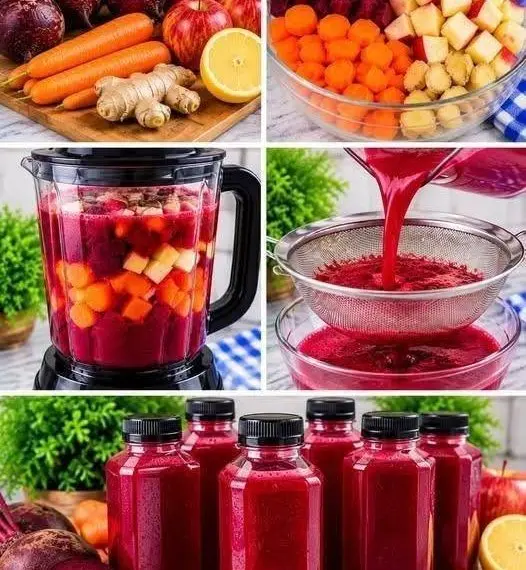
Beetroot, Carrot, Apple & Ginger Detox Juice
Beetroot, Carrot, Apple & Ginger Detox Juice is a vibrant, refreshing homemade drink made with earthy beetroot, sweet carrots, crisp apples, and a hint of spicy ginger. It offers a delicious way to enjoy a variety of fruits and vegetables in one glass.
This colorful juice provides vitamin C, beta-carotene, folate, and other beneficial plant compounds. It can be part of a balanced diet that supports normal immune function, healthy vision, and overall wellness. Although often called a detox juice, it does not cleanse toxins from the body; your liver and kidneys perform that function naturally.
1. Recipe Overview
Prep time
10 minutes
Total time
10–15 minutes
Yield
2 servings
Difficulty
Easy
Cuisine: Healthy drinks • Category: Fresh juice • Best served: Chilled and freshly prepared
2. Ingredients
For 2 servings (approximately 400–500 ml, depending on juicer yield)
1 medium beetroot
Approximately 100–120 g, washed, peeled if desired, and chopped.
2 medium carrots
Approximately 120–150 g, washed, trimmed, and chopped.
1 medium apple
Sweet red or green apple, cored and cut into pieces.
1 small piece of ginger
Approximately 1–2 cm, peeled if preferred.
½–1 cup water (optional)
Use for blending and adjusting consistency.
1–2 teaspoons lemon juice (optional)
Adds a bright, tangy flavor.
3. Instructions: How to Make the Juice
Step 1: Wash the produce
Rinse the beetroot, carrots, and apple thoroughly under clean running water. Scrub the root vegetables to remove dirt. Peel them if desired.
Step 2: Prepare the ingredients
Remove the apple core and cut all ingredients into pieces that fit your juicer or blender. Use a small amount of ginger first if you prefer a mild flavor.
Step 3: Extract the juice
For a juicer: Feed the beetroot, carrots, apple, and ginger through the machine according to its instructions.
For a blender: Add the ingredients with ½–1 cup of water and blend until smooth.
Step 4: Strain if needed
If using a blender, strain through a fine-mesh sieve or clean nut-milk bag for a smoother juice. For more fiber, leave the pulp in and enjoy it as a smoothie instead.
Step 5: Adjust and serve
Stir in lemon juice if desired. Taste and adjust with a little water. Pour into two glasses and serve immediately, preferably chilled.
4. Taste, Texture & Description Notes
- Taste: Naturally sweet from the apple and carrot, earthy from the beetroot, and gently spicy from the ginger.
- Color: Deep ruby red, sometimes with an orange or magenta tint.
- Texture: Smooth and light when strained; thicker and more filling when blended with the pulp.
- Aroma: Fresh, mildly earthy, fruity, and slightly peppery.
- Best pairing: A balanced breakfast, whole-grain toast, eggs, oats, or a handful of unsalted nuts.
- Ideal serving temperature: Chilled, without needing added sugar.
5. Nutritional Information
Estimated nutrition per serving, assuming two servings from the recipe and a typical juicer yield. Actual values depend on produce size, juice extraction, and whether the pulp is retained.
| Nutrient | Approx. per serving |
|---|---|
| Calories | 100–130 kcal |
| Carbohydrates | 24–30 g |
| Natural sugars | 17–22 g |
| Fiber | 1–3 g strained; more if blended |
| Protein | 1–2 g |
| Fat | 0–1 g |
| Vitamin C | 8–20 mg |
| Potassium | 350–550 mg |
| Folate | 50–100 mcg |
| Vitamin A activity | Varies with carrot content |
These are estimates, not laboratory measurements. Straining removes much of the insoluble fiber, and juicing yield changes the amount of each nutrient per glass.
6. Health Benefits
1. Supports cardiovascular health
Beetroot naturally contains nitrates, which the body can convert into nitric oxide. This may help blood vessels relax and can modestly lower blood pressure in some people. The effect varies from person to person.
2. Helps maintain healthy vision
Carrots provide beta-carotene, which the body can convert into vitamin A. Vitamin A is essential for normal vision and helps maintain healthy skin and immune function.
3. Provides antioxidants
Beetroot, apples, and carrots contain beneficial plant compounds, including betalains, polyphenols, and carotenoids. These contribute to the body’s defense against oxidative stress as part of an overall nutritious diet.
4. May support exercise performance
Beetroot-derived nitrates may improve exercise efficiency or endurance for some people. Results vary, and an ordinary serving of homemade juice is not guaranteed to produce a performance benefit.
5. Contributes to daily nutrient intake
The mixture supplies potassium, folate, and other micronutrients. Keeping the pulp or choosing whole fruits and vegetables provides more fiber and generally supports fullness and digestive health.
6. Helps with hydration
The water-rich ingredients contribute fluid, making this a refreshing drink, especially in warm weather. Water should still be your main everyday hydration source.
Important: This juice is not a proven treatment for anemia, weight loss, liver disease, or other medical conditions. It does not remove toxins or replace a balanced diet.
7. Expert Tips for the Best Juice
Choose fresh, firm produce. Fresh beetroot and crisp carrots provide a better flavor and texture.
Balance the earthy flavor. Use a sweet apple or a small squeeze of lemon if the beetroot tastes too strong.
Start with less ginger. Add a small piece first, then increase to taste.
Avoid unnecessary sugar. The apple and carrot usually provide sufficient sweetness.
Keep more fiber when possible. Blending and retaining the pulp generally provides more fiber than straining.
Drink it fresh. If you need to store it, refrigerate promptly in a clean, airtight container and ideally consume within 24 hours. Fresh juice is unpasteurized, so it carries a food-safety risk; refrigeration does not eliminate pathogens.
8. Variations & Substitutions
| Variation | How to adjust | Flavor or benefit |
|---|---|---|
| Citrus twist | Add lemon or orange | Brighter, tangier flavor |
| Green version | Add cucumber or celery | Lighter, refreshing taste |
| Extra ginger | Increase ginger gradually | Stronger, spicier flavor |
| Fiber-rich smoothie | Blend and keep all pulp | More fiber and a thicker texture |
| Lower-sugar version | Use half an apple and more cucumber | Less natural sugar per batch |
9. Precautions & Who Should Be Careful
- Blood sugar management: Juice can deliver sugars more quickly and with less fiber than whole fruit. Consider a smaller serving or a pulp-retaining smoothie if you have diabetes or need to monitor carbohydrate intake.
- Kidney stones: Beetroot contains oxalates. People prone to calcium oxalate kidney stones may need to limit intake according to their clinician’s advice.
- Low blood pressure or blood-pressure medication: Beetroot nitrate may lower blood pressure modestly. If you have low blood pressure or take medication, discuss regular concentrated beetroot juice consumption with your healthcare professional.
- Kidney disease: Potassium content may matter if you have a prescribed potassium restriction.
- Pregnancy and food safety: Use thoroughly washed produce and clean equipment. Avoid unpasteurized juice if advised to do so during pregnancy or if you are otherwise at higher risk from foodborne illness.
- Pink or reddish urine or stool: Beetroot can temporarily cause this harmless color change. Seek medical advice if the color persists or you suspect blood.
10. Frequently Asked Questions (Q&A)
Q1. Is beetroot, carrot, apple, and ginger juice really a detox drink?
Answer: It is a nutritious fruit-and-vegetable drink, but there is no good evidence that it removes toxins or cleanses the liver. Your liver and kidneys naturally process and eliminate waste products.
Q2. Can I drink this juice every day?
Answer: Many healthy adults can include a modest serving in their diet. Variety is important, and whole fruits and vegetables should remain a major part of your daily intake.
Q3. What is the best time to drink this juice?
Answer: There is no proven best time. Enjoy it with breakfast, as a snack, or alongside a meal. Drinking it on an empty stomach is not necessary for its nutrients to be useful.
Q4. Does this juice help with weight loss?
Answer: No juice directly causes fat loss. It can fit into a balanced eating plan, but portion size matters because juicing makes it easy to consume several fruits and vegetables quickly. A whole-fruit smoothie may be more filling.
Q5. Can I make it without a juicer?
Answer: Yes. Blend the ingredients with ½–1 cup of water. Strain if you prefer a thin juice, or retain the pulp for more fiber.
Q6. Can I prepare it the night before?
Answer: Freshly prepared juice is preferable. If necessary, refrigerate it immediately in a clean, airtight container and use it within 24 hours. Do not leave it at room temperature for extended periods.
Q7. Can I add honey or sugar?
Answer: You can, but it is usually unnecessary because the apple and carrot are naturally sweet. Additional sweeteners increase the sugar content.
Q8. Can this juice improve hemoglobin or treat anemia?
Answer: It is not a reliable treatment for anemia. Although beetroot and carrots provide useful nutrients, this juice is not a particularly rich source of iron. Suspected anemia needs appropriate testing and treatment.
Q9. Why does my urine sometimes look pink after drinking it?
Answer: Beetroot pigments can temporarily color urine or stool pink or reddish. If the change persists, is accompanied by pain, or could represent blood, seek medical advice.
Q10. Should I strain the juice?
Answer: Straining gives a smoother drink but removes much of the fiber. If your blender produces a pleasant texture, keeping the pulp is generally the more fiber-rich option.
11. Recipe Summary
Beetroot, Carrot, Apple & Ginger Detox Juice
A naturally sweet, earthy, and refreshing homemade juice that combines four simple ingredients into a colorful drink.
- Servings: 2
- Preparation: 10–15 minutes
- Calories: Approximately 100–130 per serving
- Best feature: A convenient source of plant nutrients and hydration
- Serving suggestion: Enjoy fresh alongside a balanced breakfast or snack.