Yes – with slight adjustments.
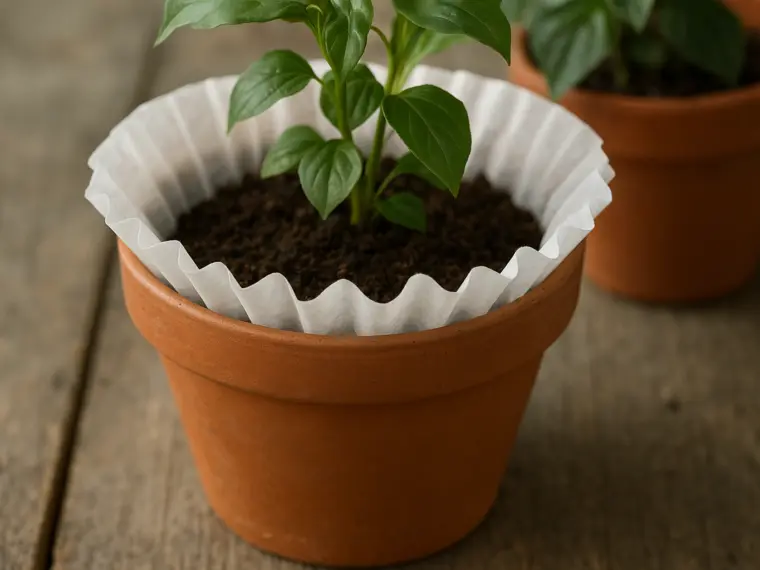
In hydroponic systems, a coffee filter can act as a root support layer, keeping soil or clay pebbles from clogging water reservoirs.
In self-watering planters, the filter helps maintain consistent moisture transfer between soil and the water chamber – preventing oversaturation or mold growth.
It’s one of those small tweaks that improves function without changing design.
How Long Does It Last?
A coffee filter lasts as long as your potting cycle – usually 1–2 years before it naturally decomposes.
When you repot your plant, simply replace it with a fresh filter. The old one can be composted, as it will have partially broken down into organic matter.
This means it’s not just functional – it’s also contributing back to your garden’s ecosystem.
Common Questions About Using Coffee Filters in Pots
1. Will the filter stop drainage completely?
No. Coffee filters are porous – they let water pass easily while holding soil in place.
2. Can I use plastic coffee filters?
Stick with paper filters. Plastic mesh filters don’t biodegrade and can block water movement over time.
3. Does it attract mold or pests?
No – as long as you avoid overwatering. The filter dries with the soil and won’t encourage mold.
4. Can I use used filters with coffee residue?
Yes, but rinse out excess grounds first. Small traces of coffee add nitrogen to the soil, but too much can make it acidic.
5. Does it affect pH or nutrient levels?
Not significantly. Coffee filters are neutral and safe for all soil types and plant varieties.
Gardening doesn’t always require fancy tools or expensive solutions – sometimes, the smartest fixes are already in your kitchen.