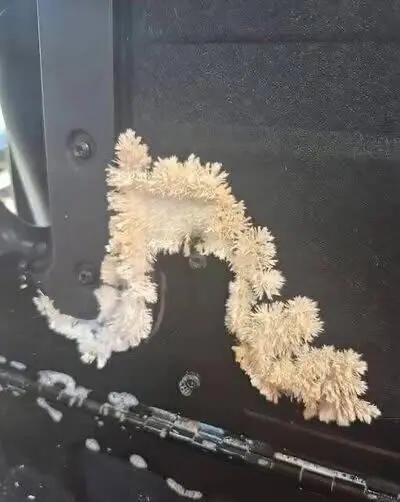
At first glance, it didn’t seem like anything dangerous. Just a strange, pale, fuzzy mass tucked under the back seat—something that looked almost like a dried plant or maybe a forgotten piece of debris. It didn’t move, it didn’t make a sound, and it certainly didn’t look threatening. But sometimes, the most harmless-looking things hide the biggest risks.
That’s exactly what happened here.
A Strange Discovery
The object caught attention because of its unusual texture. It wasn’t smooth like plastic or soft like fabric. Instead, it had a dense, branching structure, almost like coral or frost spreading across a surface. Its off-white color blended with dust and shadows, making it easy to ignore at first.
But then came the unsettling detail: tiny spikes.
Up close, the surface revealed sharp, tooth-like protrusions—irregular, clustered, and organic. That’s when it became clear this wasn’t just dirt or something someone dropped. It was growing.
What Was It, Really?
What you’re looking at is most likely a form of fungal growth, often referred to as a type of mold. In damp, poorly ventilated spaces—like the interior of a car—fungi can develop quickly if the conditions are right.
Moisture is the main trigger. A spilled drink, wet shoes, humidity, or even condensation can create the perfect environment. Combine that with warmth and darkness, and you have an ideal breeding ground for mold spores.
Over time, these spores settle, grow, and form visible colonies like the one in the image. Some types of fungi develop branching or spiky structures, which explains the strange “tooth-like” appearance.
Why This Is More Dangerous Than It Looks
Here’s where things get serious.
Mold isn’t just unpleasant—it can be harmful to your health. When disturbed, it releases microscopic spores into the air. These spores can be inhaled without you even noticing, especially in a confined space like a car.
Exposure to mold spores can lead to:
- Respiratory issues (coughing, wheezing, shortness of breath)
- Allergic reactions (sneezing, itchy eyes, skin irritation)
- Headaches and fatigue
- More severe complications for people with asthma or weakened immune systems
That’s why the reaction to remove it immediately was the right one. Ignoring it—or worse, inhaling it closely—could have led to serious health problems.
How Did It End Up There?
It’s surprisingly easy for something like this to develop under a car seat.
Think about everyday situations:
- A water bottle leaks
- Groceries spill and aren’t fully cleaned
- Rainwater soaks into carpets
- Air circulation is limited
All of these can create hidden moisture that you don’t notice until something like this appears. Since the area under seats is rarely checked, mold can grow undisturbed for days or even weeks.
What Should You Do If You Find Something Like This?
If you ever come across a similar growth, don’t touch it with bare hands and don’t disturb it unnecessarily.
Here’s the safest approach: