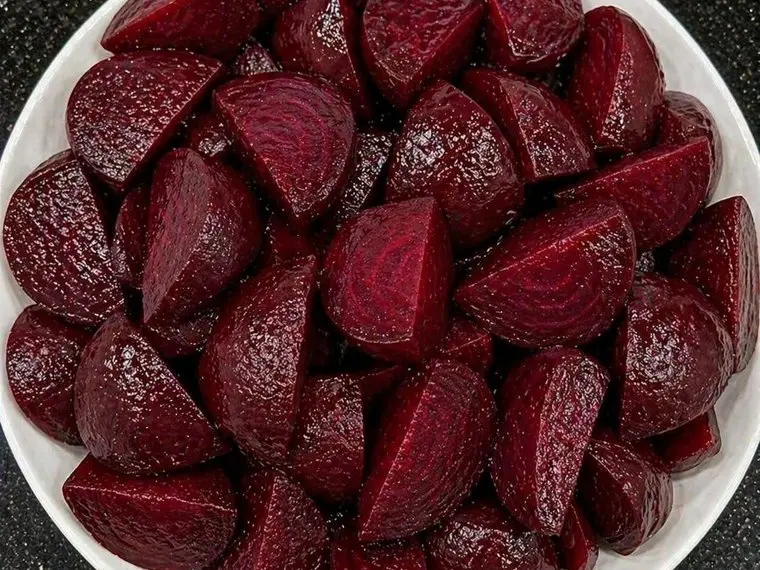
Beets are one of the most nutrient-rich root vegetables, known for their deep red-purple color and naturally occurring compounds such as dietary nitrates, betalains, fiber, folate, potassium, and other plant nutrients. Research has investigated beets for their potential effects on cardiovascular health, blood pressure, exercise performance, antioxidant activity, and metabolic health.
Fermented beets may offer some additional nutritional interest because fermentation introduces microorganisms and produces organic acids and other metabolites. However, it is important to distinguish what has been demonstrated specifically with beets from what has been observed with fermented vegetables in general.
1. Beets May Support Healthy Blood Pressure
One of the best-studied components of beets is inorganic nitrate.
After consumption, dietary nitrate can contribute to the production of nitric oxide, a signaling molecule involved in blood-vessel relaxation and circulation. Clinical research has therefore examined beetroot and nitrate-rich foods in relation to cardiovascular function.
A systematic review and meta-analysis of randomized controlled trials found that inorganic nitrate intake was associated with reductions in resting blood pressure. Another review specifically examining beetroot nitrate supplementation found improvements in some cardiovascular measures, including arterial stiffness and endothelial function.
This does not mean that eating beets treats hypertension or replaces prescribed medication. Rather, beets can be one part of a dietary pattern that supports cardiovascular health.
2. They May Support Blood Vessel Function
Healthy blood vessels need to expand and contract appropriately. This process is partly regulated by nitric oxide.
Research examining beetroot and inorganic nitrate has reported improvements in endothelial function, which refers to how well the inner lining of blood vessels functions. A meta-analysis of randomized trials found an association between nitrate/beetroot consumption and improved vascular function.
The effects can vary according to factors such as the amount of nitrate consumed, age, baseline blood pressure, and overall cardiometabolic health.
3. Beets May Help Exercise Performance
Beetroot has become popular among athletes because of its nitrate content.
Nitrate may improve the efficiency of oxygen use during certain types of exercise. A systematic review involving more than 1,700 participants found a small but statistically significant improvement in exercise performance following nitrate consumption, with beetroot juice among the forms showing effects.
Earlier meta-analyses also found benefits in certain endurance and time-to-exhaustion tests, although the effects were not equally consistent across every type of exercise.
So, beets are not a guaranteed performance enhancer, but their nitrate content may be useful for some forms of physical activity.
4. Beets Are Rich in Betalains
The striking red-purple color of beetroot comes largely from betalain pigments, particularly betacyanins such as betanin.
These compounds have antioxidant and anti-inflammatory properties in laboratory and experimental research. Reviews of beetroot research have identified potential effects involving oxidative stress, inflammation, blood vessels, lipid metabolism, and glucose metabolism.
However, an important distinction should be made:
Laboratory evidence is not the same as proof of a clinical treatment effect in humans.
Research continues to investigate how much of these compounds is absorbed and what effects they produce in people.
5. They Provide Useful Nutrients and Fiber
Whole beets provide dietary fiber along with vitamins, minerals, and a variety of plant compounds.
Their nutritional composition includes folate, vitamin C, B-group vitamins, minerals, and bioactive phytochemicals.
Fiber is particularly valuable because it contributes to normal digestive function and can help make meals more filling.
Eating whole beets also provides a different nutritional package than consuming isolated beetroot nitrate supplements.
6. Fermented Beets Can Contain Beneficial Microorganisms
Proven Health Benefits of Beets and Fermented Beets (Science Based)
6. Fermented Beets Can Contain Beneficial Microorganisms
Fermentation is different from simply soaking vegetables in vinegar.
In lacto-fermentation, naturally occurring or added lactic-acid bacteria convert carbohydrates into lactic acid. This lowers the pH and helps preserve the vegetable.
Studies examining fermented beetroot have identified lactic-acid bacteria with interesting probiotic potential. Researchers have isolated organisms such as Lactococcus lactis and Weissella cibaria from fermented beetroot and investigated their characteristics in laboratory settings.
Other research has isolated Lactobacillus species from fermented beetroot and found potentially interesting probiotic properties in laboratory testing.
But there is an important caveat: finding potentially beneficial bacteria in fermented beets does not prove that eating fermented beets produces a specific health benefit in humans.
7. Fermented Vegetables May Influence the Gut Microbiome
Research on fermented vegetables more broadly is promising but still developing.
A human pilot study involving women found that consuming approximately 100 grams of fermented vegetables per day for six weeks was associated with changes in some gut bacterial populations, although inflammatory markers did not significantly change.
Another randomized controlled trial involving 87 adults found that consuming fermented vegetables regularly for eight weeks did not significantly change several inflammatory biomarkers or overall bacterial alpha diversity.
This illustrates why claims about fermented foods should be made carefully. Fermented foods may influence the gut microbiome, but the magnitude and clinical importance of those effects are not yet fully established.
8. Fermentation May Produce Additional Bioactive Compounds
Fermentation doesn’t simply preserve vegetables. Microorganisms can transform some components of food and produce compounds such as organic acids and other microbial metabolites.
Reviews of fermented fruits and vegetables describe potential antioxidant, anti-inflammatory, metabolic, and blood-pressure-related effects, but they also emphasize that the results depend on the microorganisms and fermentation conditions involved.
This means that two fermented beet products may not necessarily have identical nutritional or microbial characteristics.
9. Fermented Beets May Support Digestive Health as Part of a Fermented-Food Diet
Evidence concerning fermented foods and gastrointestinal health has become increasingly interesting.
A 2025 systematic review and meta-analysis of 25 studies, including 19 randomized controlled trials, reported improvements in several gastrointestinal outcomes associated with fermented-food consumption, including bowel-movement frequency, stool consistency, intestinal transit time, and some gastrointestinal symptoms. However, the researchers noted that the certainty of evidence varied and was often low.
These findings concern fermented foods generally, not fermented beets specifically.
Therefore, it would be more accurate to say that fermented beets can contribute to a diet containing fermented vegetables rather than claiming that fermented beets have been proven to treat constipation or digestive disease.
10. Beets and Fermented Beets Are Not the Same Thing
Proven Health Benefits of Beets and Fermented Beets (Science Based)
10. Beets and Fermented Beets Are Not the Same Thing
There are several important differences.
Fresh or cooked beets
These primarily provide:
- Dietary nitrate
- Fiber
- Betalains
- Folate
- Potassium
- Other plant compounds
Their strongest research interest is currently related to cardiovascular function and exercise physiology.
Fermented beets
These provide the nutrients naturally present in beets while also undergoing microbial fermentation.
Depending on the fermentation process, they may contain:
- Lactic-acid bacteria
- Organic acids
- Fermentation metabolites
- Modified plant compounds
However, the exact nutritional and microbial profile depends heavily on the fermentation method.
11. A Simple Way to Include Beets in Your Diet
Beets don’t need to be consumed as a supplement.
You can enjoy them:
- Roasted with olive oil and herbs
- Added to salads
- Blended into smoothies
- Grated into vegetable salads
- Added to soups
- Served with yogurt or a creamy dressing
- Naturally fermented as a vegetable
For fermented beets, choose products prepared using a proper food-safe fermentation method and follow appropriate refrigeration and storage instructions after fermentation.
12. A Note About Beetroot and Blood Pressure Medication
Because nitrate-rich beetroot may influence blood pressure, people taking blood-pressure-lowering medication should not assume that more is necessarily better.
Beets are a food, not a replacement for prescribed treatment. If you have hypertension or take medication that affects blood pressure, discuss major dietary changes or concentrated beetroot products with your healthcare professional.
Some people may also notice red or pink urine or stools after eating beets. This is commonly known as beeturia and can occur because of beet pigments; it is not automatically a sign of illness.
13. What Does the Science Actually Support?
The evidence is strongest for the following areas:
Beetroot and nitrate → cardiovascular and vascular effects:
Several randomized trials and meta-analyses provide evidence of beneficial effects on certain measures of vascular function and blood pressure.
Beetroot and exercise:
Research supports modest improvements in some exercise-performance measures, particularly in certain endurance-related settings.
Betalains → antioxidant and anti-inflammatory activity:
Strong experimental evidence exists, but more human research is needed before making therapeutic claims.
Fermented beets → probiotics:
Fermented beetroot can contain lactic-acid bacteria with potentially useful properties, but direct human clinical evidence specifically on fermented beets remains limited.
Fermented vegetables → gut health:
Human research is promising but mixed, and larger, longer studies are needed.
Frequently Asked Questions
Proven Health Benefits of Beets and Fermented Beets (Science Based)
Frequently Asked Questions
Are fermented beets healthier than regular beets?
Not necessarily. Fermentation may add microorganisms and fermentation-derived compounds, but fresh or cooked beets already provide nitrate, fiber, betalains, vitamins, minerals, and other beneficial plant compounds.
Do beets lower blood pressure?
Research suggests that nitrate-rich beetroot can produce modest improvements in blood pressure and vascular function in some people. However, beets should not be considered a treatment for hypertension.
Can beets improve exercise performance?
They may. Beetroot nitrate has been associated with modest improvements in some types of exercise performance, although results vary depending on the activity and individual.
Do fermented beets contain probiotics?
They can contain potentially beneficial lactic-acid bacteria. However, whether a particular fermented beet product qualifies as a probiotic food depends on the organisms present, their viability, and other factors. Research specifically involving fermented beetroot is still developing.
Are fermented beets good for the gut?
They may contribute to a diet that supports gastrointestinal health, but evidence specifically for fermented beets is limited. Research on fermented vegetables and fermented foods more broadly has produced promising but not uniformly positive findings.
Can I eat beets every day?
For most healthy people, beets can be part of a varied diet. There is no need to consume very large amounts to obtain nutritional benefits.
Conclusion
Beets are more than a colorful vegetable. Their combination of dietary nitrate, betalains, fiber, vitamins, minerals, and other plant compounds makes them an interesting food from a nutritional and scientific perspective.
The strongest human evidence concerns vascular function, blood pressure, and certain aspects of exercise performance. Fermentation adds another dimension because it can introduce lactic-acid bacteria and alter the food’s chemical composition.
At the same time, fermented-beet claims should remain evidence-based. Research on fermented vegetables and gut health is growing, but specific clinical evidence for fermented beets is still much more limited than the evidence for beetroot nitrate and cardiovascular function.
In practical terms, both ordinary beets and properly fermented beets can fit into a balanced diet—but neither should be presented as a cure for disease.