⚠️ Are Bagworms Harmful?
Here’s the important part—they can be.
While a single bagworm isn’t a big problem, a large infestation can cause serious damage.
Potential risks:
- They feed on leaves and needles
- Can defoliate trees and shrubs
- May weaken or even kill plants if left unchecked
Evergreen trees are especially vulnerable because they don’t regrow foliage as easily as deciduous plants.
🔄 What Happens Next in Its Life Cycle?
Bagworms go through a fascinating transformation:
- Larva (what you see now) – builds and lives inside the bag
- Pupa – seals itself inside the case to transform
- Adult moth
- Males emerge as winged moths
- Females often stay inside the bag and never leave
After mating, the female lays eggs inside the same case, starting the cycle all over again.
🛠️ Should You Remove It?
That depends on your situation:
✔️ Remove it if:
- You see multiple bagworms on plants
- Your trees or shrubs are being damaged
- You want to prevent an infestation
❌ Leave it if:
- It’s just one or two
- No visible plant damage
- You’re simply curious about nature
Easy removal method:
- Pick it off by hand
- Drop it into soapy water to ensure it doesn’t survive
🌱 Prevention Tips for Gardeners
Since you’re interested in gardening, this is where it gets useful:
- Regularly inspect trees and shrubs
- Remove bags early (before they hatch eggs)
- Encourage natural predators like birds
- Keep plants healthy to resist damage
🤯 Why This Looks So Creepy (But Is Actually Amazing)
What makes this creature so unsettling is also what makes it brilliant:
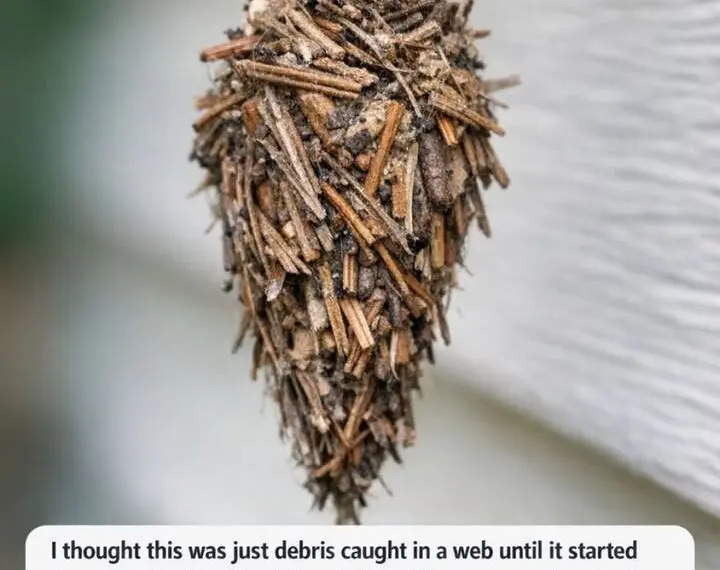
- It disguises itself as debris
- It moves while staying hidden
- It builds a custom shelter from its environment
It’s basically a tiny architect, survival expert, and illusionist all in one.
Final Thoughts
What seemed like a strange moving pile of debris is actually a clever insect using one of nature’s best camouflage strategies. While it can become a pest in large numbers, a single bagworm is more of a fascinating discovery than a threat.
If you ever see one again, you’ll know—you’re not looking at trash…
you’re looking at a living, moving masterpiece of survival.