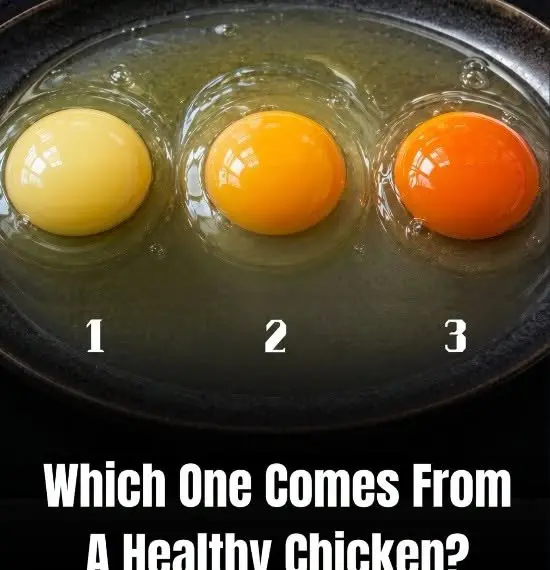
Have you ever cracked open an egg and been surprised by the color of the yolk?
Maybe it was a pale yellow.
Maybe it was a rich golden orange.
And maybe you’ve heard someone say that a darker yolk means the egg came from a healthier chicken.
It sounds believable.
After all, a deep golden yolk looks wonderfully rich and nutritious, while a pale yellow yolk can seem almost disappointing.
But here’s the surprising part:
Yolk color alone does not tell you whether a chicken is healthy or whether an egg is nutritionally superior.
The color of an egg yolk is influenced heavily by what the hen eats, particularly the pigments in her diet.
So if you’ve ever wondered which egg comes from a healthy chicken, let’s crack this mystery wide open!
If you enjoy discovering the truth behind everyday food questions, subscribe by email so you don’t miss the next one.
Does a Dark Orange Egg Yolk Mean the Chicken Is Healthier?
Not necessarily.
A deep orange yolk can be perfectly normal, but it isn’t a reliable health test for the hen.
The color of the yolk is primarily influenced by carotenoid pigments in the chicken’s diet.
These pigments can come from ingredients such as:
Corn
Marigold petals
Alfalfa
Green leafy plants
Certain grains
Other pigment-rich feed ingredients
When a hen consumes more of these pigments, some can be deposited in the yolk.
The result?
A beautiful golden-orange yolk.
But a hen eating a diet with fewer of these pigments can produce an egg with a much paler yellow yolk.
Both can come from healthy chickens.
So Which Egg Comes From a Healthy Chicken?
Here’s the answer I wish more people knew:
You cannot determine a chicken’s health simply by looking at the yolk color.
A healthy hen can produce eggs with pale yellow, golden, or orange yolks.
Likewise, a darker yolk doesn’t automatically mean the hen was healthier, better cared for, or fed a superior diet.
If you’re trying to assess egg quality, you need to look at much more than color.
Consider:
How the eggs were produced
How they were handled and stored
The condition of the shell
Freshness
The hen’s overall diet
Farming and housing practices
Food-safety practices
Yolk color is interesting, but it’s only one small piece of the puzzle.
Why Are Some Egg Yolks Pale Yellow?
A pale yolk isn’t automatically a bad yolk.
In many cases, it simply reflects the pigments available in the hen’s feed.
If the diet contains fewer yellow, orange, or green pigments, the resulting yolk may be lighter.
Think of it almost like a natural food coloring system.
The hen eats the pigments.
Her body processes them.
Some of those pigments make their way into the yolk.
And that’s why two perfectly normal eggs can look surprisingly different when cracked open side by side.
Why Are Some Egg Yolks Deep Orange?
This is where things get especially interesting.
Certain feed ingredients are rich in carotenoids and can intensify yolk color.
A hen that consumes more pigment-rich feed may produce eggs with deeper yellow or orange yolks.
This is one reason eggs from backyard hens can sometimes have dramatically orange yolks.
If a hen has access to fresh vegetation, insects, plants, or specially formulated feed containing pigment-rich ingredients, her yolks may look different from those produced by hens eating another diet.
And yes, that orange color can be beautiful!
But don’t confuse more color with automatically more nutrition.
Does Yolk Color Affect Nutrition?
It can—but color itself isn’t a nutritional guarantee.
Some carotenoid pigments that influence yolk color also have nutritional or antioxidant properties.
For example, lutein and zeaxanthin are naturally occurring carotenoids found in egg yolks.
However, the nutritional composition of an egg depends on many factors, including the hen’s diet.
So a darker yolk may sometimes reflect differences in certain nutrients or pigments, but you can’t look at an orange yolk and accurately conclude:
“This egg is healthier.”
That’s simply too big a leap.
Does a Darker Yolk Have More Protein?
Not necessarily.
Yolk color doesn’t tell you how much protein the egg contains.
Most of the egg’s protein is found in the white, while the yolk contains protein along with fat, vitamins, minerals, and other nutrients.
The color of the yolk isn’t a reliable way to estimate protein content.
Are Brown Eggs Healthier Than White Eggs?
Here’s another common egg myth!
Brown eggs aren’t automatically healthier than white eggs.
Shell color is primarily determined by the breed or genetics of the hen.
A brown-shelled egg and a white-shelled egg can have very similar nutritional profiles.
The same basic idea applies here:
Color doesn’t tell the whole story.
And this is completely separate from yolk color.
A white egg can have a deep orange yolk.
A brown egg can have a pale yellow yolk.
The shell and yolk colors are influenced by different factors.
What Does a Healthy Egg Look Like?
Instead of judging an egg solely by yolk color, look at the bigger picture.
The Shell
A clean, intact shell is generally preferable.
Avoid eggs with cracked or leaking shells, especially if you don’t know how long they’ve been damaged.
The White
When cracked into a bowl, a fresh egg often has a thicker, more cohesive white around the yolk.
Older eggs tend to have thinner whites that spread more widely.
The Yolk
A fresh egg often has a yolk that sits relatively high and holds its shape well.
But again, color is not a freshness test.
A pale yolk can be fresh.
A dark yolk can be fresh.
The Smell
This is a big one.
If an egg smells distinctly rotten or unpleasant after cracking, don’t eat it.
When in doubt, throw it out.
Does a Bright Orange Yolk Mean the Hen Was Free-Range?
No.
A bright orange yolk doesn’t prove that a chicken was free-range.
Hens can receive pigment-rich feed that produces richly colored yolks regardless of whether they were raised on pasture.
Likewise, a free-range hen can produce a relatively pale yolk depending on what she’s eating.
If you’re interested in how the hen was raised, look at the labeling and production information, not the yolk color.
What About Backyard Chicken Eggs?
Backyard eggs can be especially fascinating because the yolks may vary significantly depending on what the hens eat.
A chicken with access to grass, weeds, leafy plants, insects, kitchen-safe feed, and other foods may produce yolks with different shades throughout the year.
You might even notice the yolks changing color with the seasons.
That’s completely normal.
The diet changed.
The yolk changed.
Nature is wonderfully simple sometimes!
Can Two Eggs From the Same Chicken Have Different Yolk Colors?
Yes, yolk color can vary over time.
Changes in feed can affect the pigments deposited in the yolk.
So even eggs from the same hen don’t necessarily have to look identical forever.
This is another reason not to use yolk color as a simple health score for the chicken.
What Actually Matters When Choosing Eggs?
If your goal is to buy high-quality eggs, think beyond the color.
Consider the Production Method
If animal welfare or farming practices matter to you, look for labeling that matches your priorities.
Terms such as pasture-raised, free-range, organic, or cage-free describe production systems or standards, depending on the country and labeling rules.
Check Freshness
Look at the date information and store eggs properly.
Inspect the Carton
Choose eggs with clean, intact shells and packaging that isn’t damaged.
Think About Your Own Priorities
Some people prioritize organic feed.
Others care most about animal welfare.
Some want locally produced eggs.
Others are primarily concerned with price.
There’s no single “best” egg for everyone.
How to Tell if an Egg Is Fresh
Freshness is a different question from chicken health, but it’s one people often connect with yolk appearance.
Here are a few clues.
Crack It Into a Separate Bowl
This is especially useful when you’re unsure about an egg.
You can inspect the appearance and smell before adding it to the rest of your ingredients.
Look at the White
A fresh egg often has a thicker white that stays closer to the yolk.
As the egg ages, the white tends to become thinner.
Look at the Yolk
A fresh yolk often appears rounded and stands higher.
But don’t use the color as your freshness test.
Trust Your Nose
A strong sulfurous or rotten smell is a clear reason not to use the egg.
Frequently Asked Questions
Is a darker egg yolk healthier?
Not automatically. Darker yolks often reflect higher levels of pigment in the hen’s diet, but yolk color alone doesn’t prove that an egg is healthier or that the hen was healthier.
What color yolk is the healthiest?
There isn’t one specific yolk color that can be labeled the healthiest. Pale yellow, golden, and orange yolks can all come from healthy hens.
Why are farm-fresh egg yolks so orange?
The hen’s diet is usually the main reason. Access to plants and other pigment-rich foods can increase the amount of carotenoids deposited in the yolk.
Does an orange yolk mean the chicken ate grass?
Not necessarily. Grass and other plants can contribute pigments, but specially formulated feed can also produce darker yolks.
Are pale yellow egg yolks bad?
No. A pale yolk is not automatically a sign of a sick chicken or a poor-quality egg.
Does yolk color indicate freshness?
No. Freshness is better judged by factors such as the condition of the egg, the appearance of the white and yolk, storage history, and smell.
Are brown eggs healthier than white eggs?
No. Shell color is primarily related to the hen’s genetics and does not by itself determine nutritional quality.
Do darker yolks contain more vitamins?
Not necessarily. Some pigments associated with darker yolks, such as carotenoids, have nutritional value, but yolk color alone cannot tell you the complete nutrient content of an egg.
Can the same chicken produce different colored yolks?
Yes. Changes in diet can change yolk pigmentation over time.
What should I do if an egg smells bad?
Don’t eat it. A strong unpleasant or rotten odor after cracking is a good reason to discard the egg.
A Simple Egg-Choosing Checklist
The next time you’re comparing eggs, don’t get distracted by yolk color alone.
Instead, consider:
1. Check the shells.
Choose eggs without cracks or visible damage.
2. Look at the date information.
Follow the storage and date guidance for your location.
3. Consider the production label.
Choose based on the farming practices and standards that matter to you.
4. Store eggs properly.
Follow local food-safety recommendations.
5. Inspect eggs before using them.
If an egg smells rotten after cracking, discard it.
6. Remember that yolk color isn’t a health score.
A beautiful orange yolk can be delicious, but it isn’t proof of a healthier chicken.
Final Thoughts
So, which egg comes from a healthy chicken?
You can’t tell simply by looking at the yolk.
A pale yellow yolk isn’t automatically inferior.
A bright orange yolk isn’t automatically superior.
The color mostly tells you something about the pigments in the hen’s diet—not whether the chicken was healthy or whether the egg is guaranteed to be more nutritious.
And honestly, I think that’s what makes eggs so fascinating.
Crack open two eggs from different hens and you can see completely different shades of yellow and orange sitting side by side.
But behind those colors is a much more complicated story involving genetics, diet, farming practices, and nutrition.
So enjoy that beautiful golden yolk!
Just don’t judge the whole egg—or the health of the hen—by color alone.
More Food Mysteries to Explore
If you enjoy discovering the truth behind everyday foods, you may also enjoy:
Why Some Eggs Have Two Yolks
What the White String in an Egg Actually Means
Why Some Egg Yolks Are Pale Yellow
How to Tell If an Egg Is Fresh
Why Brown Eggs Cost More Than White Eggs
What Different Egg Carton Labels Really Mean
Did You Notice a Strange Yolk?
Have you ever cracked open an egg with an incredibly orange yolk?
Or maybe you’ve seen a very pale yolk and wondered whether something was wrong?
Leave a comment and share your experience! And if this article helped clear up the mystery, save it to Pinterest or share it with another egg lover.
Sometimes the simplest kitchen questions lead to the most interesting discoveries!
Nutrition Note
The nutritional content of eggs can vary somewhat depending on the hen’s diet, egg size, and production system.
For the most accurate information, check the nutrition information provided for the specific eggs you’re buying rather than trying to estimate nutrition from yolk color.